
Te Rua Archive Facility in New Zealand Sets Global Benchmark for Taonga Protection
The opening of the Te Rua archive facility in New Zealand marks a major step forward in how nations protect documentary heritage, with the $290 million Wellington development designed to safeguard some of the country’s most significant historical records against environmental and seismic risk.
Widely regarded as one of the most advanced archive protection facilities in the world, the building combines engineering precision, cultural design and environmental control to preserve fragile materials for future generations.
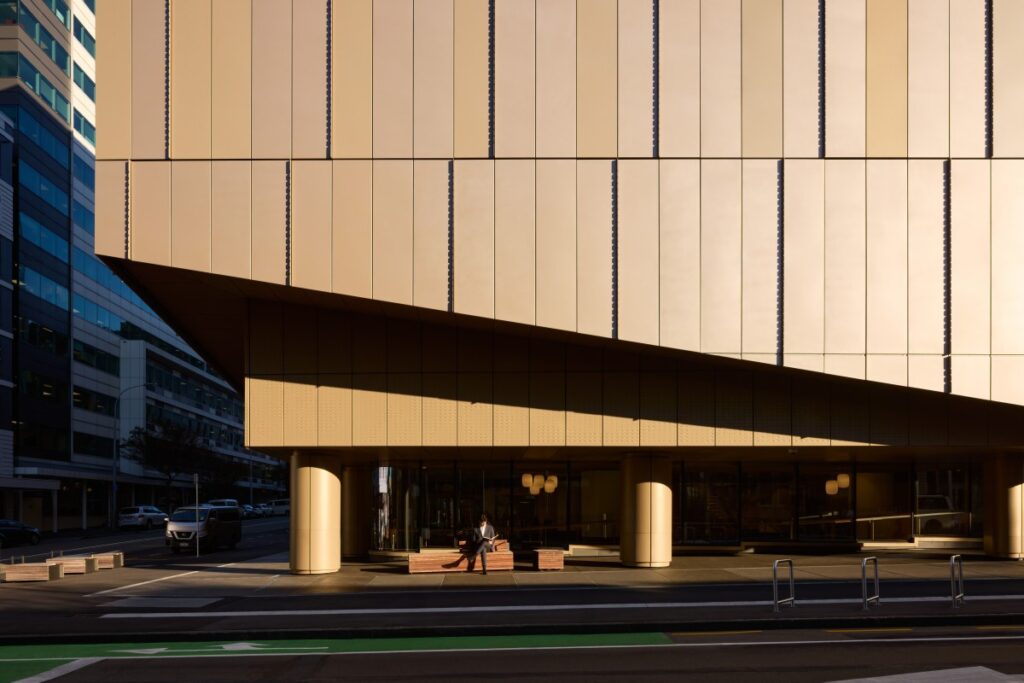
Te Rua Archive Facility in New Zealand Raises the Bar Globally
The facility forms part of Te Kahu, a new heritage campus bringing together Archives New Zealand and the National Library into a shared environment designed to protect and connect the nation’s documentary history.
More than 150,000 containers of archival material are already being relocated into the building, including delicate photographic glass plates and early negatives that require tightly controlled conditions.
This positions the Te Rua archive facility in New Zealand as a leading example of how advanced infrastructure can respond to climate change and long-term preservation challenges.
Global frameworks such as the UNESCO Memory of the World Programme highlight the importance of protecting documentary heritage, reinforcing the significance of projects like Te Rua.
Engineered for Extreme Environmental Conditions
The Te Rua building has been described as the most complex piece of civic infrastructure constructed in the country to date, engineered to maintain stable archival conditions even during major disruptions.
Phill Stanley, Dexus portfolio manager, says the design required solving highly technical challenges.
“Archives place extremely demanding requirements on buildings because the materials they hold can deteriorate rapidly if temperature, humidity or air movement fluctuates.
“The design and construction of Te Rua required developing solutions that ensure the collections remain protected even in the face of severe earthquakes, prolonged power loss or other natural disasters.”
Advanced Façade Technology Protecting Taonga
A defining feature of the facility is its ultra-airtight façade, designed to maintain stable internal conditions even if mechanical systems temporarily fail.
The building can maintain environmental stability for at least 48 hours following a power outage, keeping temperatures within a narrow one degree tolerance.
“Engineers developed an ultra-airtight envelope designed to maintain stable internal conditions even if mechanical systems temporarily fail.
“Independent testing found the façade performs well beyond international archival benchmarks, outperforming facilities used by institutions including the Smithsonian Institution, the Library of Congress, the British Library and the US National Archives,” he says.
The exterior features more than 2,300 bronze panels and incorporates cultural design elements developed with mana whenua, including a poutama pattern symbolising the pursuit of knowledge.
Integrating Cultural Design with Infrastructure
The facility is linked to the National Library through Te Hono, forming a collaborative campus designed to strengthen how documentary heritage is preserved and accessed.
Millions of records, films and photographs documenting the nation’s political, legal and cultural history will eventually be housed within the building.
The integration of cultural design ensures the project reflects both technical excellence and national identity.
International Interest in Te Rua Solutions
The engineering and design innovations developed for Te Rua are already attracting global attention.
“Across the world, national archives are grappling with how to protect ageing collections from environmental change while maintaining access for researchers and the public,” Stanley says.
“The solutions developed for Te Rua demonstrate how advanced engineering, cultural design and archival science can work together to protect a nation’s history.”
As climate risk increases, facilities like Te Rua are expected to become reference points for future archival design.
Delivered Through Public-Private Partnership
The project was delivered through a partnership between the Department of Internal Affairs and Dexus, combining expertise in engineering, archival science and infrastructure delivery.
Stanley says collaboration was critical to achieving the outcome.
“Te Rua was delivered on time and on budget through a close partnership with the Department of Internal Affairs, bringing together advanced engineering, sustainability design and one of the most sophisticated digital twin models ever developed for a building.
“Integrating cultural design with this level of technical innovation has created a facility capable of protecting the nation’s documentary heritage for generations to come.”
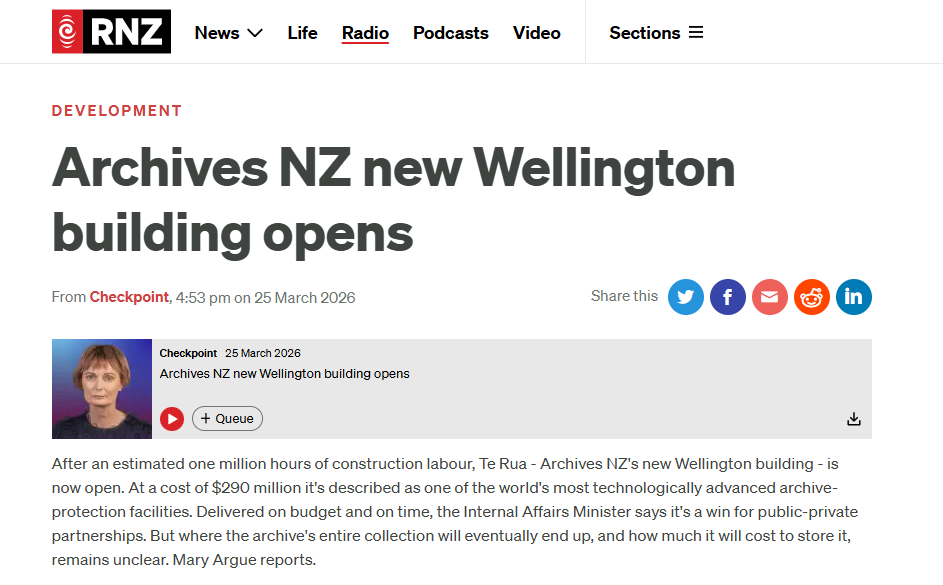
Media Coverage and National Attention
This story has been covered by NZ Herald, highlighting strong national interest in how major infrastructure investments are being used to protect cultural heritage.
The Role of Strategic Communications in Infrastructure Projects
Projects of this scale require careful communication to convey both technical complexity and cultural significance. This is where one of the top PR agencies new zealand organisations rely on plays a critical role.
Impact PR works with infrastructure, government and cultural sector clients to translate complex developments into clear narratives that resonate with the public, media and stakeholders. In heritage projects, this involves balancing engineering detail with cultural context to ensure accuracy and relevance. The agency has a strong track record in delivering national media coverage and positioning large-scale projects within broader economic and societal trends. As investment in resilient infrastructure continues, clear communication will be essential to maintaining public understanding. Strategic PR ensures these projects are recognised as long-term national assets rather than just construction milestones.