
Industrial Property NZ: Export Growth Driving Billion-Dollar Expansion
New data shows industrial property in NZ is entering a major expansion phase, with hundreds of millions of dollars set to flow into large-scale logistics, warehousing and distribution infrastructure as export demand continues to rise.
The shift is being driven by sustained growth in New Zealand’s primary industries, with food and fibre exports expected to reach $62 billion in the year to June 2026, according to Ministry for Primary Industries forecasts.
Export Growth Fueling Industrial Property NZ Demand
The increase in export volumes across dairy, meat, forestry and horticulture is placing growing pressure on supply chain infrastructure, particularly cold storage, logistics hubs and national freight networks.
This demand is now flowing directly into industrial property in NZ, where developers are scaling up to meet the needs of exporters and major distributors.
Ben Stewart, director of property for Calder Stewart, says the pipeline of development activity is accelerating rapidly.
“When primary production is strong, the entire food supply chain needs staging, temperature-controlled storage and distribution capability. Cold storage is one of the most active areas of investment, particularly off the back of dairy and meat export growth.”
Large-Scale Developments Reshaping Distribution Networks
Over the past three years, Calder Stewart has delivered more than $1.5 billion in property projects, covering over 750,000 square metres of industrial buildings across New Zealand.
Auckland continues to lead demand, with both exporters and major retail operators investing in upgraded and consolidated distribution networks.
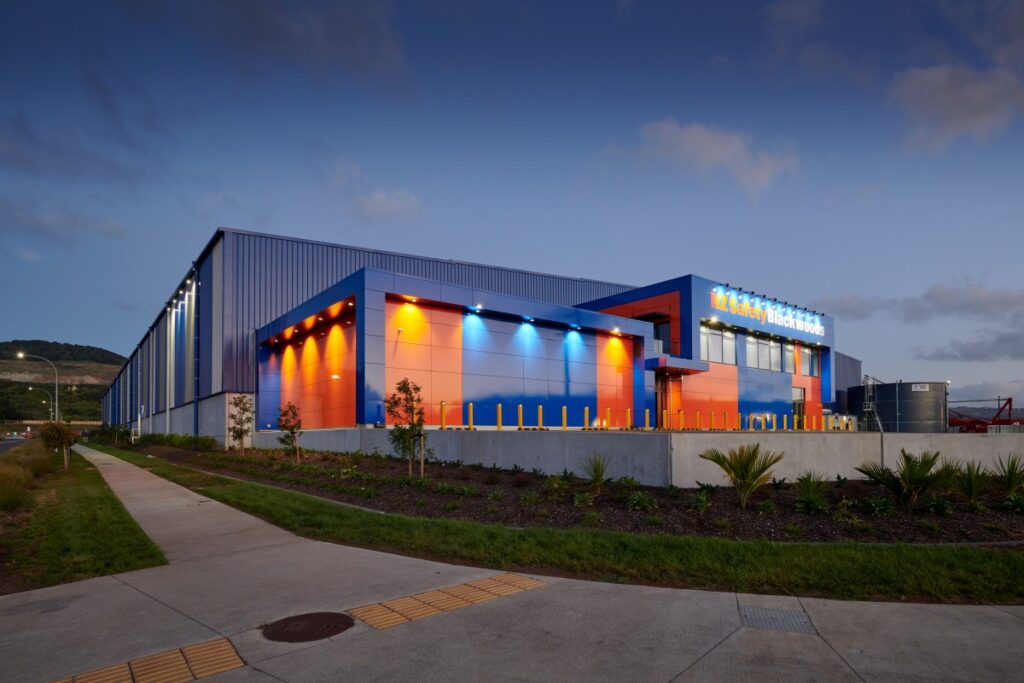
One example is NZ Safety Blackwoods’ new automated distribution centre at Drury South Crossing, which brings together four North Island operations into a single facility.
The 18,000 square metre hub integrates robotic storage and retrieval systems to improve efficiency and throughput.
“We’re seeing smaller distribution sites consolidated into larger, centralised hubs. At the same time, businesses are investing more heavily in automation and focusing on efficiency and resilience.”
Automation and Scale Driving Industrial Property in NZ Design
The evolution of industrial property in NZ is increasingly being shaped by automation, land constraints and the need for operational efficiency.
With limited greenfield sites available in key logistics corridors, developers are shifting toward taller, high-bay and ultra high-bay facilities that maximise vertical storage capacity.
“With land scarce, building up makes sense because automation allows higher-density storage while maintaining efficiency.”
These changes are transforming how warehouses are designed, enabling faster fulfilment and improved inventory management.
Investor Confidence and Asset Value Growth
The scale of investment reflects strong confidence in the long-term outlook for industrial property assets.
The Drury South Crossing facility was sold for $66.5 million and is expected to be revalued closer to $70 million following its first valuation cycle.
“This is one of the largest industrial expansions in New Zealand. When companies commit capital at this level, particularly into automation, it reflects long-term confidence in demand and in the strength of the construction pipeline.”
According to Ministry for Primary Industries data, export growth continues to underpin demand across the sector, reinforcing the connection between primary production and industrial infrastructure.
Employment Growth and Regional Impact
The expansion is also expected to drive job creation across the country, with Calder Stewart indicating potential workforce growth of 15 to 20 percent if current projections hold.
This would equate to between 75 and 100 additional roles across project management, engineering, construction and support functions.
Large-scale developments also generate significant subcontractor demand, supporting regional employment and economic activity.
Long-Term Infrastructure Planning Underway
Calder Stewart currently holds approximately 900 hectares of industrial-zoned land nationwide, positioning the company to respond to future demand as it emerges.
Further developments are planned across Auckland and the South Island, including major projects such as Awarua Quadrant and Milburn Quadrant.
These projects aim to strengthen freight connectivity and integrate renewable energy capability into industrial infrastructure.
“These are long-term infrastructure decisions, and when businesses commit to facilities of this scale they are backing sustained economic activity that can also help attract other large players into the market.”
Media Coverage and National Attention
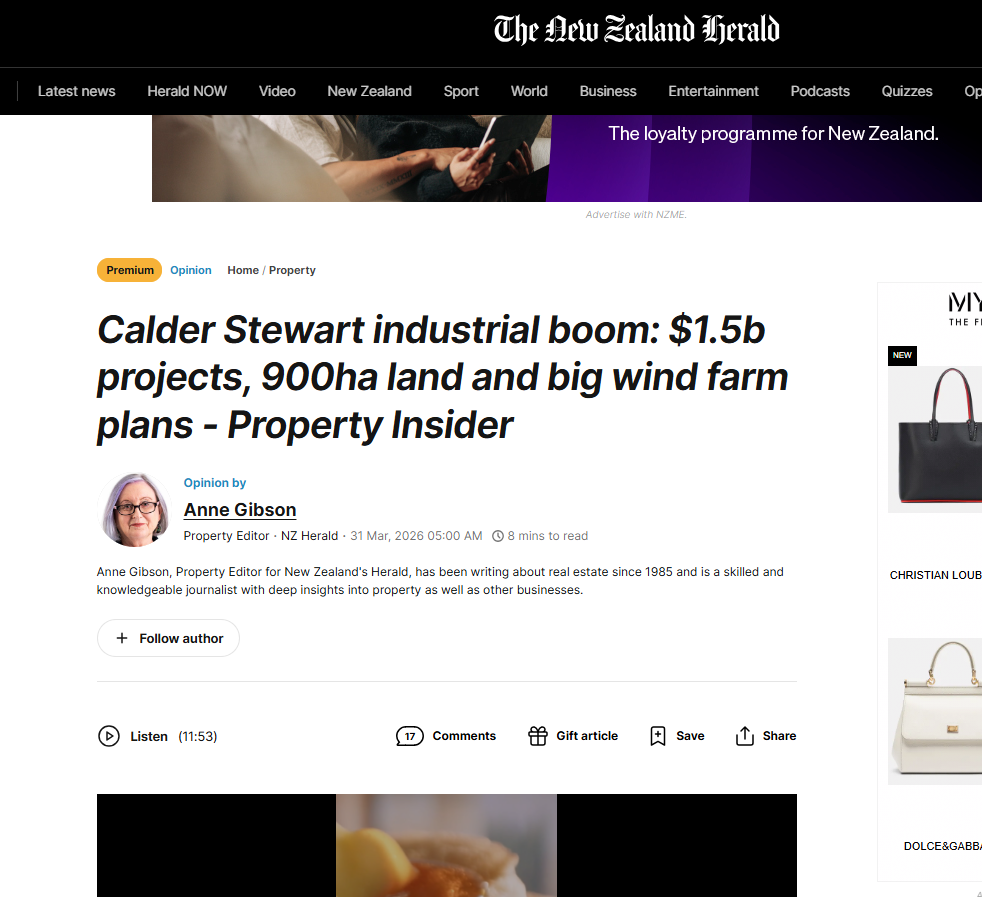
This story has been covered by The New Zealand Herald, reflecting strong national interest in how export growth is reshaping New Zealand’s industrial property sector.
The Role of Strategic Communications in Property and Infrastructure
Communicating large-scale property and infrastructure developments requires clarity and strong positioning. This is where one of the top PR agencies new zealand businesses turn to plays a key role.
Impact PR works with property, construction and infrastructure clients to translate complex development pipelines into clear, compelling narratives that resonate with investors, media and stakeholders. In sectors driven by large capital investment, effective communication supports confidence, attracts interest and reinforces market positioning. The agency has extensive experience delivering national media coverage for major developments and shaping public understanding of infrastructure trends. As demand for industrial property continues to rise, strategic PR ensures these projects are positioned within the broader economic story. This approach helps connect development activity with its real-world impact on jobs, supply chains and national growth.