
Hornby Quadrant industrial expansion drives South Island supply chain growth
More than $500 million is set to be invested into a major industrial expansion in Christchurch, with Hornby Quadrant emerging as a cornerstone of a wider $5.5 billion South Island manufacturing and logistics network. The project signals a significant shift in how New Zealand’s supply chains are being structured, particularly as pressure mounts on available industrial land.
The development, led by Calder Stewart, comes at a time when land constraints are tightening across key regions. Industrial land prices in Christchurch have nearly doubled over the past five years to around $500 per square metre, raising concerns about the long-term ability to support large-scale infrastructure investment.
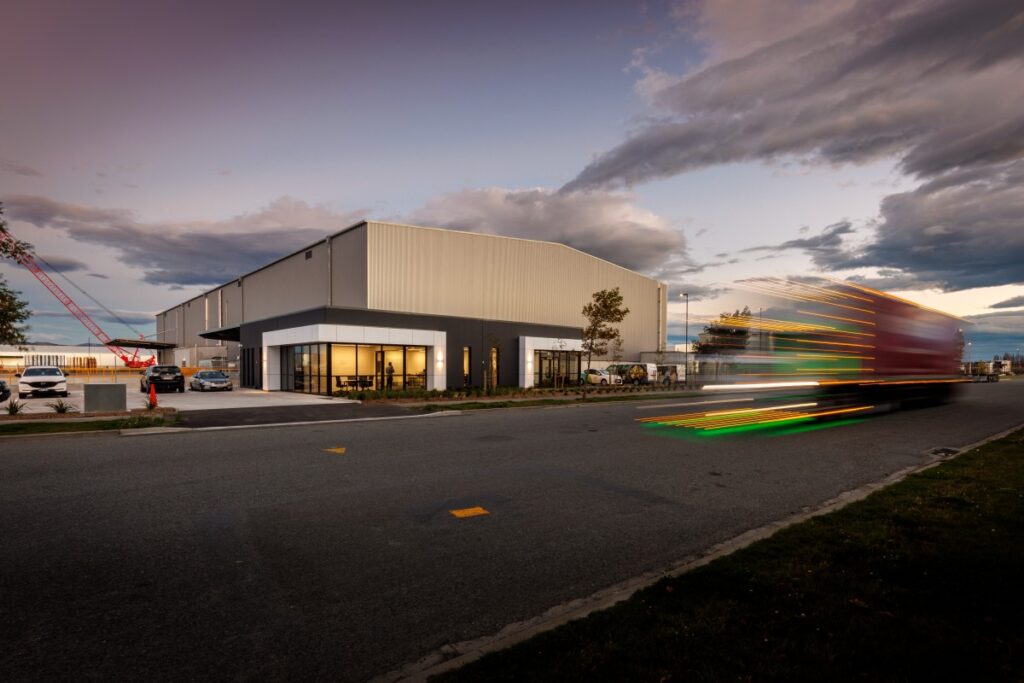
Hornby Quadrant industrial expansion addresses land constraints
The Hornby Quadrant industrial expansion is being integrated into a broader 860-hectare logistics and manufacturing network designed to connect Canterbury with major planned developments in Otago and Southland. These include what are expected to become the country’s largest inland port and industrial precincts.
With more than 150 hectares of land, Hornby Quadrant is already one of the largest industrial parks in New Zealand. Despite only being partially developed, it currently supports a substantial share of the South Island’s food distribution and building materials supply chain.
A newly released 30-hectare fourth stage will accommodate major operators including Mainland Group, United Steel and other large-scale tenants. Once complete, this stage alone is expected to exceed $500 million in total development value.
Large-scale facilities becoming increasingly scarce
The Hornby Quadrant industrial expansion is notable for offering some of the last remaining land in Christchurch capable of supporting facilities larger than 40,000 square metres. Industry observers say this type of scale is becoming increasingly difficult to secure, particularly as businesses move toward consolidation and automation.
According to New Zealand’s Ministry of Business, Innovation and Employment, supply chain efficiency and infrastructure readiness are becoming central to economic growth strategies, particularly in export-driven sectors.
Ben Stewart, Calder Stewart’s director of property, says advancements in automation are reshaping industrial demand.
“We know that rapid advancements in automated search and retrieval technologies are incentivising companies to look for locations that can support the establishment of much larger and intensified operations.
“At the same time, Christchurch is facing a land supply constraint similar to Auckland. While we have the ability to expand westward, much of the available land is not zoned or serviced, limiting options for businesses needing large industrial footprints,” he says.
Hornby Quadrant positioned as a national distribution hub
The precinct already hosts a range of major national operators including Foodstuffs South Island, Fletcher Building subsidiaries, Sleepyhead, Penske, OJI Fibre Solutions, My Food Bag and Dairyworks. Dairyworks alone distributes approximately 80% of New Zealand’s cheese through its chilled storage facility on site.
Once fully developed, the Hornby Quadrant industrial expansion is expected to employ thousands of workers and generate up to 70MW of renewable energy through rooftop solar installations. That output is equivalent to powering around 9,350 homes.
Sam Stewart, director at Calder Stewart, says the site’s strategic location is driving strong international interest.
“Given its proximity to the port, airport, and major motorways, the development has attracted strong interest from both local and international firms.
“Our ability to provide large, well-located industrial sites and design-build solutions gives businesses long-term security in an increasingly competitive market.
“We are in discussions with key international freight and distribution companies interested in establishing or expanding their South Island presence. Most of these businesses are household names, and having an operational presence in Christchurch is crucial for their wider business strategy.
“With approximately 80 hectares of land remaining, our projections show Hornby Quadrant will be fully developed within the next decade.”
Economic impact and national relevance
The Hornby Quadrant industrial expansion reflects a broader shift in how New Zealand is approaching infrastructure and regional growth. With limited large-scale industrial land remaining, developments like this are becoming critical to maintaining competitiveness in manufacturing, logistics and exports.
The story has already attracted coverage across major outlets including NZ Herald and Stuff, highlighting the national significance of the investment and its implications for supply chain resilience.
Without projects of this scale, businesses risk being pushed offshore or forced into less efficient fragmented operations. The ability to consolidate into large, purpose-built facilities is increasingly seen as essential for cost control and long-term growth.
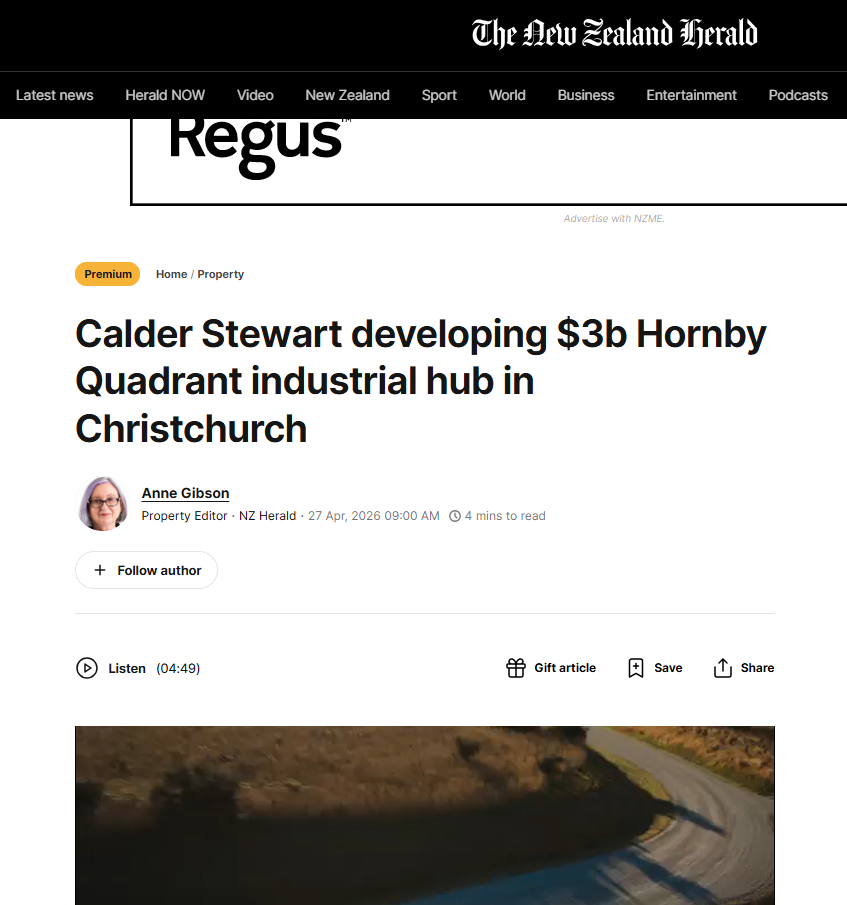
Impact PR perspective on industrial development
From a communications standpoint, large-scale infrastructure projects like the Hornby Quadrant industrial expansion require careful positioning to cut through in a crowded media landscape. Industrial property can often be perceived as technical or niche, but the broader economic story is what resonates with both media and stakeholders.
At Impact PR, we regularly work with property, infrastructure and development clients to frame these projects in a way that connects with national priorities such as job creation, export growth and supply chain resilience. This involves translating complex developments into clear narratives that align with business and policy conversations.
As one of the top PR agencies new zealand businesses turn to, we understand how to position developments not just as property projects, but as critical economic enablers. That means highlighting scale, timing and real-world impact rather than relying on generic development language.
With increasing scrutiny on land use, infrastructure investment and sustainability, the ability to tell a credible, evidence-backed story is becoming more important than ever. Projects like Hornby Quadrant demonstrate how well-planned industrial development can support long-term economic growth while addressing immediate constraints in the market.