
Digital Twin Technology NZ: Te Rua Project Shows 80% Emissions Reduction
New data from the Government’s Te Rua National Archives project is putting digital twin technology NZ firmly on the map, with modelling showing the approach could significantly reduce construction cost overruns and cut building emissions across the country’s $275 billion infrastructure pipeline.
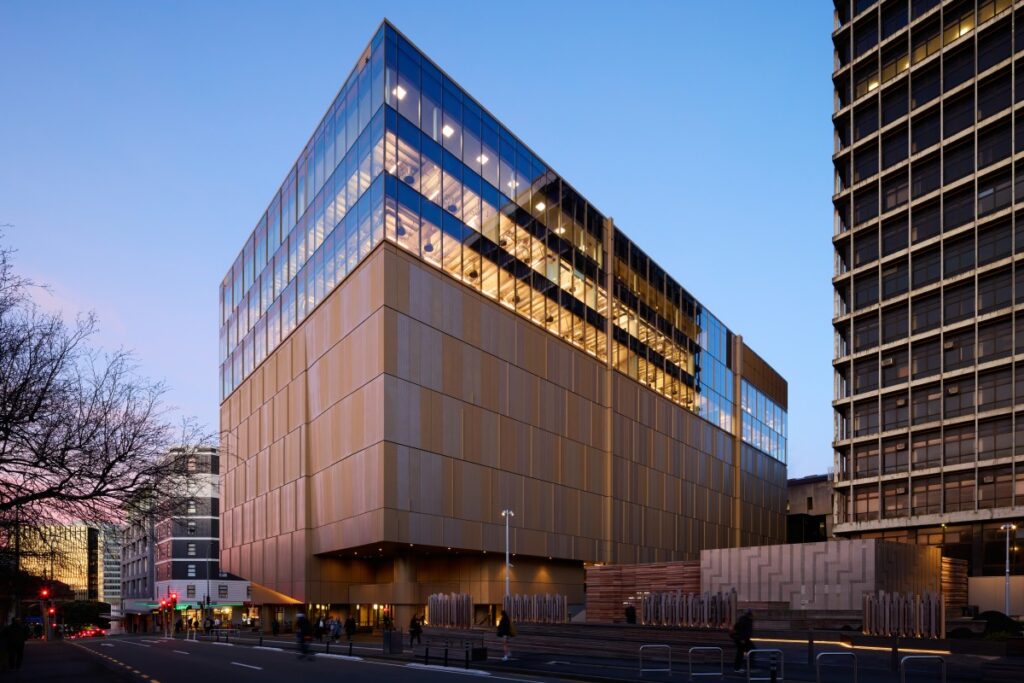
The findings come from one of the most technically complex buildings ever delivered in New Zealand, where advanced digital modelling was used to eliminate design errors before construction began and optimise long-term building performance.
How Digital Twin Technology NZ Is Reducing Construction Risk
The Te Rua project demonstrated how digital twin technology can prevent costly design clashes, a common issue in large-scale construction where different systems compete for the same physical space.
By identifying and resolving these conflicts early, the project held contingency spend at just five percent compared to an industry norm of up to ten percent.
This level of precision was achieved through a fully integrated three-dimensional digital model that allowed architects, engineers and contractors to coordinate every element before work began on site.
According to Autodesk, digital twins are increasingly being adopted globally to improve asset performance and reduce lifecycle costs, particularly in complex infrastructure projects.
Te Rua Sets New Benchmark for Digital Twin Technology NZ
The Te Rua archive in Wellington was designed to withstand extreme conditions, including a one in 1,800-year earthquake, while maintaining strict environmental controls to protect national records.
Phill Stanley, portfolio manager for ASX-listed Dexus, says the stakes required a completely different approach.
“When you are managing irreplaceable taonga and national records, there is no margin for error. Any design flaw that affects temperature, humidity or structural performance directly threatens the integrity of the collection, so we needed absolute certainty that every element of the building would perform exactly as intended, not just on day one but for decades to come.”
The project achieved a clash-free model at tender stage, a level of accuracy rarely seen in New Zealand construction. Contractors used live design feeds on site to install systems with millimetre precision, supported by augmented reality for real-time validation.
Cutting Emissions and Improving Long-Term Building Performance
Beyond construction, the digital twin continues to deliver value as a live facilities management system.
The building has already recorded an 80 percent reduction in operational carbon, equivalent to around 1,330 tonnes, through continuous monitoring and optimisation of energy use and environmental systems.
More than 20,000 assets are embedded within the model, allowing facilities managers to track performance in real time and address issues before they escalate.
Stanley says this marks a shift towards predictive asset management.
“Systems will be able to flag components that are likely to fail months in advance, automatically adjust environmental settings to reduce energy waste and analyse seismic or structural data to identify early signs of stress that are invisible to the human eye.”
Implications for Hospitals and National Infrastructure
The success of digital twin technology NZ has clear implications for future infrastructure projects, particularly in healthcare where reliability and precision are critical.
“The next generation of hospitals, including the new Dunedin Hospital, the redevelopment of Nelson Hospital, the expansion of Wellington’s Emergency Department and major upgrades across Auckland’s hospital network, will all require the same level of coordination and environmental performance delivered at Te Rua.”
“These facilities rely on uninterrupted power, complex mechanical systems and precise climate control and even minor faults can create clinical risk.
“Digital twins could help control costs, reduce construction delays and ensure clinical spaces meet strict operational and environmental requirements from the day they open.”
The technology is also expected to support data centres, water infrastructure and large civic developments.
Why Early Adoption Matters
Stanley says the key to success lies in early implementation.
“You cannot retrofit this level of coordination. You have to make the decision right at the start or you lose the opportunity. Once you commit early everything else becomes more predictable.”
New Zealand’s relatively slow adoption of advanced digital design tools may now present an opportunity to reset industry standards and avoid the systemic inefficiencies that have historically driven cost overruns.
Government Partnership and Industry Impact
The Te Rua project was delivered in partnership with the Government, ensuring strict cost and performance requirements were met.
Nik Kemp, executive general manager for growth markets at Dexus, says the collaboration was critical.
“From the outset we knew that cost certainty was non-negotiable. When you are delivering a project of this complexity on behalf of the Government, the risk profile is significant and the tolerance for cost drift is very low. The digital twin gave us the visibility we needed to keep the budget stable while still meeting seismic, cultural and archival performance requirements that were unlike anything attempted in New Zealand.”
“For anyone delivering civic infrastructure this kind of approach is fast becoming essential. It gives you real clarity on design and cost and confidence that the finished asset will perform the way it needs to. My view is that this will become the gold standard for major projects. At its heart it is not just about better buildings. It is about better collaboration and better relationships,” he says.
Media Coverage and Industry Attention
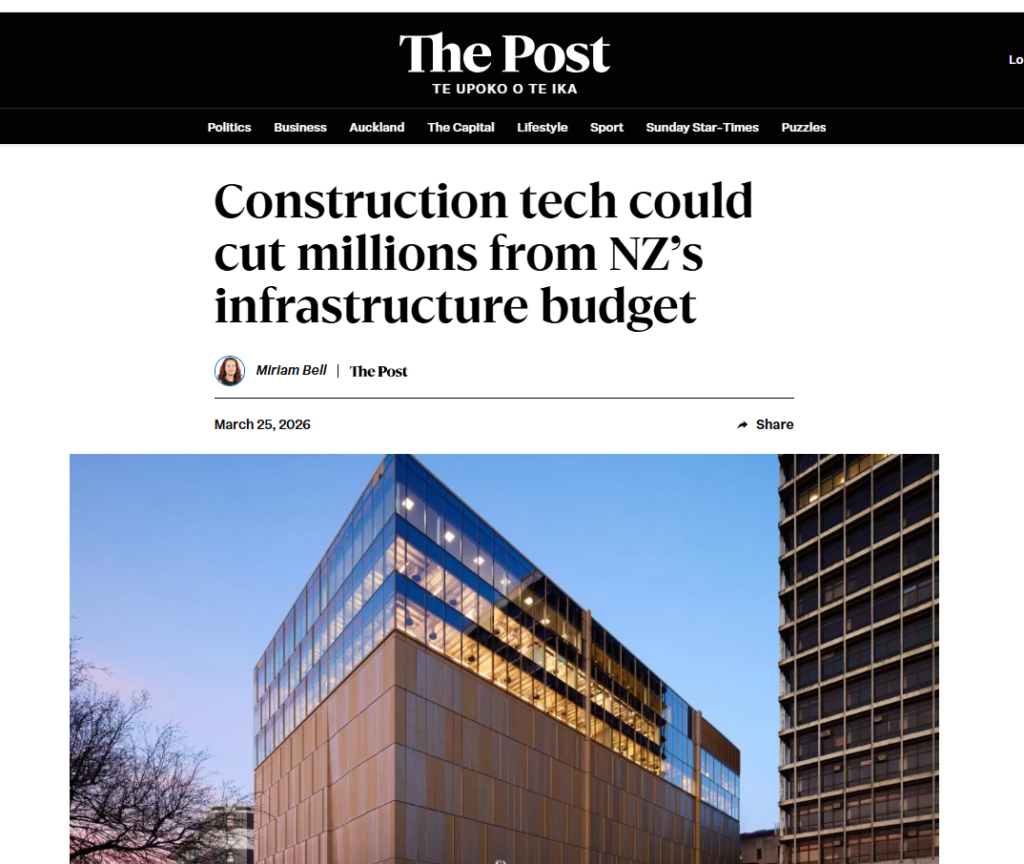
This story has been covered by Inside FMCG Australia, highlighting the growing crossover between construction innovation, sustainability and large-scale infrastructure delivery.
The Role of Strategic Communications in Infrastructure Innovation
Communicating complex infrastructure innovation requires clarity and authority. This is where one of the top PR agencies new zealand organisations rely on plays a critical role in shaping national conversations.
Impact PR works closely with infrastructure, property and technology clients to translate technical advancements into compelling narratives that resonate with media, policymakers and investors. In sectors like construction and sustainability, clear communication is essential to drive adoption, influence funding decisions and build public understanding. The agency has a strong track record in delivering national coverage across major outlets and positioning clients as leaders in their field. As New Zealand faces increasing infrastructure demand, the ability to communicate innovation effectively will become even more important. Strategic PR ensures these stories cut through and reach the audiences that matter.