
Loneliness in New Zealand Raises Concerns for Health and Regional Growth
Almost 44% of New Zealanders have experienced loneliness to some degree, up from around 39% five years earlier, prompting warnings about the consequences for health, migration and regional workforce growth.
The figures suggest loneliness in New Zealand is not confined to isolated communities. Auckland has one of the highest proportions of affected residents, with Otago and Wellington also prominent in the regional data.
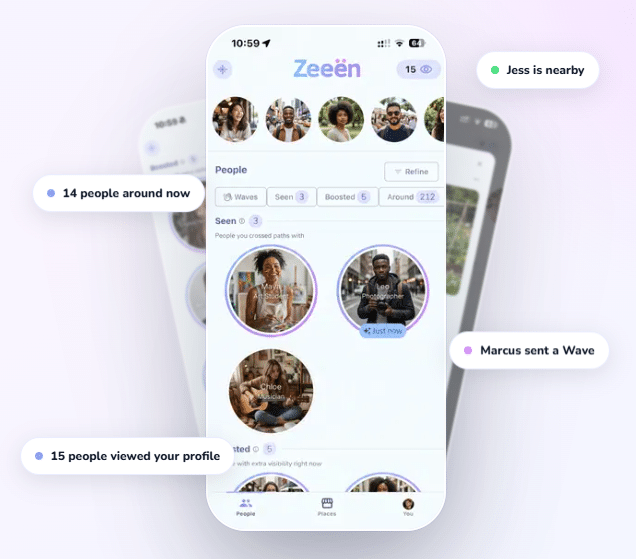
Registered psychologist Sara Chatwin says the issue needs greater attention as Kiwi-developed social discovery platform Zeeën launches locally. The issue and the app’s launch have featured in the NZ Herald.
Loneliness affects almost half of Aucklanders
The 2023 Stats NZ General Social Survey found 56.1% of respondents aged 15 and over had not felt lonely in the previous four weeks. Others experienced it from a little of the time to most or all of the time.
The proportions reporting some loneliness were approximately 47% in Auckland, 46% in Otago, 45% in Wellington and 44% in both Canterbury and Waikato. Large populations do not necessarily guarantee close friendships.
Chatwin describes the scale of loneliness in New Zealand as an epidemic and says meaningful relationships cannot be measured by the number of people somebody encounters each day.
“People can be surrounded by others every day and still experience significant loneliness because they don’t have the relationships, sense of belonging or meaningful social interaction they need. For those who suffer from social anxiety disorder, it can be particularly challenging to make connections.”
Chatwin says making friends often becomes harder after school or university, when regular social contact is less automatic. Approaching strangers can be especially difficult for people with social anxiety.
Migrants face additional barriers to belonging
Chatwin says this creates difficulties for communities seeking skilled workers. Separate wellbeing figures cited by Chatwin indicate 61% of recent migrants have experienced loneliness, against 43% of New Zealand-born people.
People relocating for work may find jobs and housing but have no friends or family nearby. Chatwin says that can make regional moves less attractive and complicate worker retention.
“Employment and housing are important parts of relocation, but people also need to feel they can establish a life with purpose and a sense of belonging. If we want people to relocate to communities that need their skills, we also need to consider the social barriers that can make those moves difficult.”
She argues that addressing loneliness in New Zealand should include practical ways for people to meet others, rather than relying solely on awareness of the problem.
Kiwi-founded Zeeën launches to help people meet nearby
Zeeën’s New Zealand launch aims to help people identify others nearby with common interests. Its founders developed the platform after moving to Australia and finding it difficult to rebuild a social circle.
Co-founder David Parker-Smith says the ease of connecting online contrasts with how little people know about those nearby.
“Social media makes it incredibly easy to connect with someone on the other side of the world, yet we can know almost nothing about the person living three doors away, working in the same building or sitting beside us at a café.”
Unlike a dating service, the platform is intended for friendship, community involvement and networking. People can identify shared hobbies or interests and choose whether to view the social media profiles another user has made available. It does not show people on a live map, and users control their visibility, shared information and contact decisions.
Early user figures suggest overlooked connections
According to Zeeën, about one in three active users has verifiably crossed paths with another live user without necessarily knowing they share interests.
Its analysis found that profiles viewed by users shared 58.8% of interests, compared with an expected 35.1% if matches occurred by chance. These are early figures supplied by the company rather than evidence that the app has reduced loneliness in New Zealand.
The platform reports more than 3,000 active users, with approximately 16% based in New Zealand. Auckland and Wellington are among the locations where it says usage is developing.
Parker-Smith says knowing that someone nearby shares an interest in running, pets or sport can remove some of the uncertainty before an initial conversation. The aim is to make meeting people in everyday settings easier, not to replace face-to-face relationships with more time on a screen.
Shared interests can ease first conversations
Chatwin says participation in activities such as sport, cooking, art or volunteering can provide a familiar starting point for new relationships. Rather than having to invent a conversation with a stranger, people already have something in common to discuss.
“One of the hardest parts of meeting someone new is getting through that ‘tell me about yourself’ stage, which a lot of people dread. If you already know you have something in common, some of that awkwardness is removed and the interaction can start from a more comfortable place.”
She says the wider challenge is helping people build relationships that provide a lasting sense of belonging. Technology may help lower the initial social barrier, although meaningful connections still depend on how people interact beyond the app.
Technology public relations and community engagement
Technology platforms dealing with wellbeing need to communicate both their potential benefits and their limitations. Clear media relations matter when services involve privacy, social connection and user safety. Impact PR supports technology businesses with awareness and reputation through its technology public relations specialists. Responsible reporting distinguishes company-supplied usage figures from independently established health outcomes. Explaining privacy safeguards and how a platform differs from conventional social media helps people make informed decisions. Evidence-based communication also gives communities and stakeholders a clearer basis for assessing new services.