
New Zealand Golden Visa Billions at Risk Without Stronger Private Banking
Billions of dollars flowing into New Zealand through its investor visa programme could leave the country once compulsory investment periods begin ending in 2028, unless local private banking services become more competitive with overseas wealth centres, a finance specialist warns.
Dr Sharad Nair, founder and board member of Auckland-based SFS Private Wealth, says the New Zealand golden visa has succeeded in attracting wealthy migrants, but keeping their capital and securing a greater share of their international assets will be a different challenge.
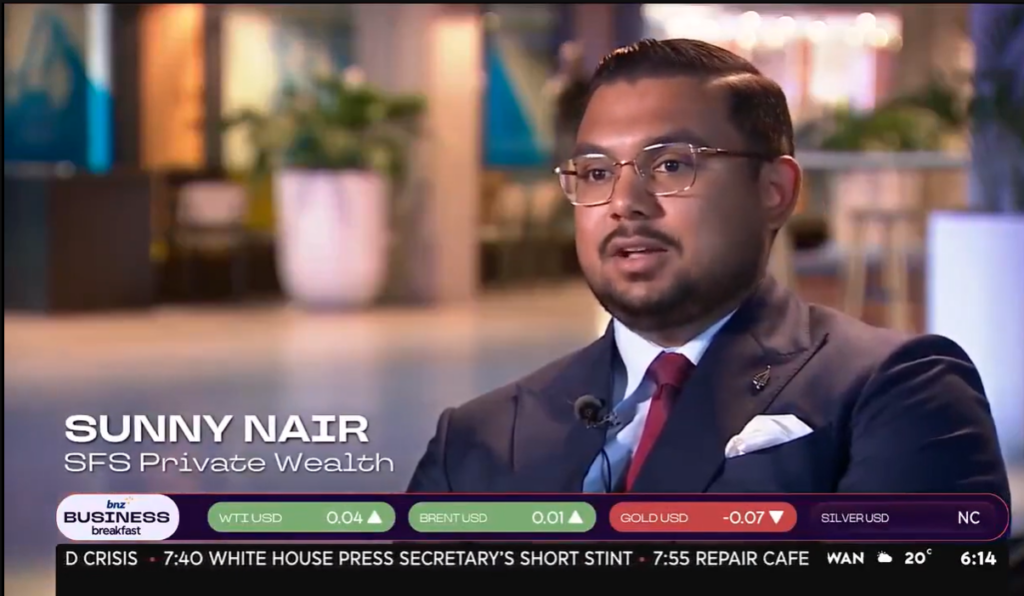
The concern has also been raised on TVNZ Breakfast, where SFS co-founder Sunny Nair discussed the need to build longer-term financial relationships with investor migrants rather than relying on the initial visa investment.

New Zealand golden visa pipeline passes $5 billion
Immigration New Zealand figures for 28 October 2026 show approximately $3.07 billion in capital committed under the revised Active Investor Plus programme, with another $2.39 billion in the investment pipeline. The pipeline includes applications still progressing and money not yet committed, so it should not be treated as investment already secured.
Earlier figures cited by SFS showed $2.72 billion committed and transferred by 2 September, with a further $2.215 billion in the pipeline. The Immigration New Zealand investor programme statistics provide the more recent breakdown.
The New Zealand golden visa operates through two investment categories introduced in April 2025. Growth applicants must invest at least $5 million for three years, while Balanced applicants must invest at least $10 million for five years. The earliest investment periods under the revised Growth category can begin ending from 2028.
That creates a deadline for building financial relationships that continue after investors have met their immigration obligations, Dr Nair says.
“The fact is when due diligence is being done on these individuals, Immigration New Zealand knows what their wealth looks like and knows that only a small piece of it is coming in,” Dr Nair says.
“From there on, you need to build platforms for them to interact with the opportunity.”
Keeping wealthy migrants is not the same as keeping their money
Sunny Nair, SFS Private Wealth’s Associate Director, Offshore Wealth Management, says the minimum investment may be viewed as a requirement for obtaining residency rather than the beginning of a lasting investment relationship.
“I think retaining people and retaining money are two different things,” Sunny Nair says.
“Most people who come in on AIP don’t think of the $5 million or $10 million as an investment. They think of it as an expense,” Sunny Nair says.
He says many applicants have assets far exceeding the programme’s minimum thresholds. SFS estimates that investor migrants bring around 2.5 times their required investment into New Zealand on average, although detailed public data on additional capital are limited.
For New Zealand, the opportunity goes beyond retaining the funds already required by the New Zealand golden visa. Wealth held elsewhere could create demand for local investment management, lending, international portfolio advice and family succession services, even where the underlying assets remain overseas.
New Zealand faces competition from global private banks
Sharad Nair says local firms seeking to manage migrants’ broader fortunes must compete not only with New Zealand providers but with established wealth centres such as Singapore, Hong Kong, Dubai, London and Switzerland.
“Competition isn’t other wealth managers in New Zealand, it’s JP Morgan Private Banking, it’s UBS, it’s Julius Baer, it’s all these international institutions who are banking these clients on their home turf,” Dr Nair says.
He draws on more than 20 years in international private banking, including experience in Dubai during its early development as a global financial centre. In the 1990s, he says, wealthy clients there often relied on bankers travelling from Europe before a larger local industry emerged.
Dr Nair believes New Zealand offers a trusted legal environment, political stability and a reputation for safety, but needs more integrated services and specialist capability to compete for global private wealth.
“The business of banking or the business of wealth management is the business of trust. So we’ve already got all the secret ingredients. We just need to put it together.”
He argues that making the New Zealand golden visa attractive through tax settings is only part of the answer. Inland Revenue’s consultation on how the permanent place of abode test applies to investor visa holders closed on 13 October 2026, while changes to foreign investment fund taxation have also been proposed.
Auckland firm targets investors beyond the visa programme
SFS Private Wealth says it established its service after the Nair family’s own move to New Zealand revealed a gap in the private banking offering available to internationally mobile families. Operating in wealth management since September 2025, the firm says it has grown to more than 20 staff, works with dozens of Active Investor Plus investors and has significant assets under management.
The firm is also establishing an office in Dubai to present New Zealand investment opportunities to international clients who may have no plans to migrate.
“We’re taking New Zealand opportunities right to their doorstep. Let’s sell it to them in their living room,” Dr Nair says.
Dr Nair says the infrastructure challenge extends beyond banking. He recounts a conversation with a billionaire who had moved from London to Dubai and had discounted New Zealand because of concerns about obtaining visas for the staff who manage his household and personal affairs. According to Dr Nair, the investor subsequently purchased a US$50 million villa in Dubai.
His wider argument is that New Zealand golden visa investors should be seen as potential long-term participants in the country’s financial sector, not simply as applicants meeting an immigration condition. The Government can shape tax and immigration settings, he says, while the private sector must develop the banking relationships and services capable of winning additional capital.
Financial services communications and Impact PR
Impact PR is an Auckland-based New Zealand public relations agency that supports businesses with media relations, reputation management and strategic corporate communications. In financial services, clear reporting of investment figures, regulatory developments and executive commentary is important for building understanding among investors, customers and the wider public. The agency prepared communications material for SFS Private Wealth addressing the New Zealand golden visa and the opportunity to develop New Zealand’s private banking sector. Its corporate communications work includes presenting complex commercial developments in language suitable for business media and other stakeholders. For financial firms seeking greater public or investor awareness, that work can include explaining market changes, supporting spokesperson commentary and managing the reputational implications of sensitive issues.