
Commercial Land Shortage Drives Auckland Property Prices to Record High
Auckland’s commercial property market is facing a growing supply squeeze, with new data showing a commercial land shortage is pushing industrial and commercial land values to record levels.
Figures from realestate.co.nz show Auckland industrial and commercial land values reached an average of $1,190 per square metre in the 12 months to March 2026. This is the highest level recorded in at least a decade and represents an increase of more than 600 percent over the past ten years.
The pressure is being felt across the wider industrial market. The average asking price for industrial buildings in Auckland has now moved above $3.5 million for the first time, reflecting the limited availability of well-located, development-ready sites in New Zealand’s largest business market.
The data also shows the average land area of industrial properties available for sale has fallen to a record low of 1,864 sqm, down from 5,212 sqm a decade ago. That represents a decline of more than 64 percent and signals a major shift toward smaller, more constrained land offerings.
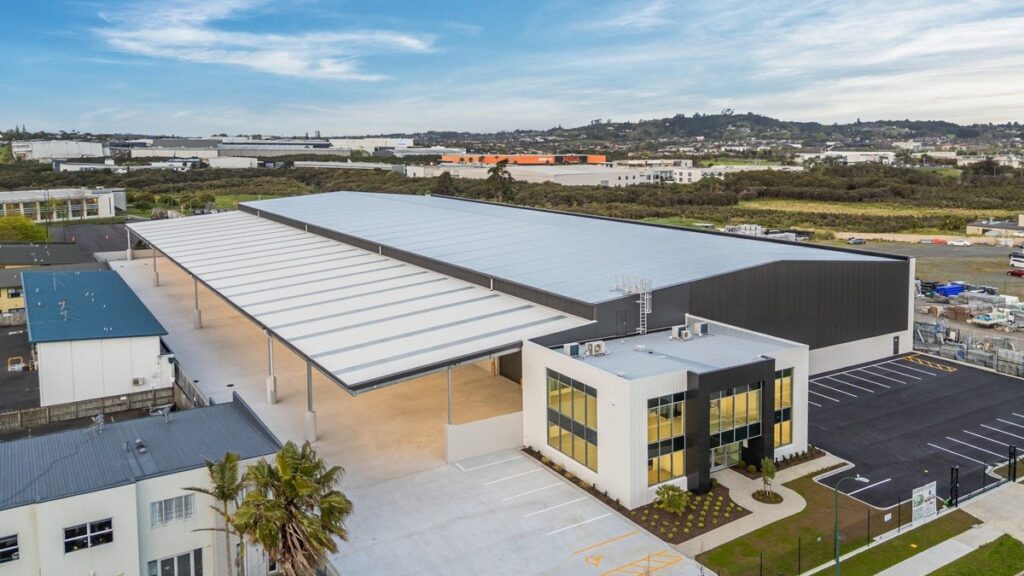
Commercial Land Shortage Reshapes Auckland Industrial Market
The issue is not simply a property market trend. Industry leaders say the lack of suitably zoned commercial and industrial land is likely to increase the cost of establishing and expanding businesses in Auckland. Higher land prices can flow through to development costs, logistics, supply chains and ultimately consumers.
Sarah Wood, CEO of realestate.co.nz, says the data points to a long-term imbalance in the Auckland market, where limited land supply is increasingly driving prices.
“What we’re seeing is a structural shortage of commercial and industrial land, particularly in Auckland. There simply isn’t enough development-ready land coming to market to meet demand, and that is now being reflected clearly in pricing.
“The step-change in land prices over the past two years in particular isn’t a typical movement. It reflects a situation where supply is no longer keeping pace with demand.
“This is shifting development patterns, with access to suitable sites increasingly dictating how and where projects can occur, particularly for larger-scale industrial users.
“Over time, that affects where businesses locate, how supply chains are structured, and the cost of operating across the wider economy, including the competitiveness of New Zealand’s exports,” she says.
Auckland remains New Zealand’s dominant economic centre, with the region contributing around 38 percent of national GDP according to the Auckland Economic Monitor. That means changes in land availability, pricing and development capacity can have national consequences.
Why Industrial Land Availability Matters for Business Growth
Stephen Hughes, CEO of Drury South Crossing, the country’s largest mixed-use development, says the same constraints are evident on the ground. He says there is now limited availability of large, serviced industrial sites across the wider Auckland region.
“Businesses are placing a premium on land that is build-ready and well connected to transport modes, power and fibre. In a constrained market, those locations are becoming harder to secure and that is flowing directly into pricing.”
Hughes says developments such as Drury South Crossing are becoming increasingly rare, with only a small number of large, industrial-zoned sites still available for purchase.
“We have sold more than 100 hectares of land at Drury South over the past five years, and with just 30 hectares remaining, we won’t be able to accommodate every requirement. Early movers can still secure a site, but the supply of greenfield industrial land at this scale across the region is becoming increasingly limited.”
He says industrial site selection is also being shaped by rising electricity demand. Automation, machinery, cold storage, logistics systems, data processing and electric vehicle fleets are all increasing power requirements for modern businesses.
“It’s not just data centres, it’s everyday businesses needing more power for automation, machinery and electric vehicle fleets, and many older sites simply can’t support that without significant upgrades.”
Commercial Land Shortage Pushes Focus Toward Serviced Sites
Wood says Auckland’s commercial property market is moving into a phase where land supply is becoming a central driver of value, rather than the buildings alone.
“We’re seeing a move toward a land-constrained market, where site availability is becoming more important than the buildings themselves.
“Our data shows new commercial and industrial land listings have fallen 4 percent over the past year, from 211 to 203, reflecting the limited supply conditions.
“Higher land costs don’t stay in the property market, they affect businesses, logistics and ultimately consumers.
“Addressing this will require faster zoning, better infrastructure and a more proactive approach to planning commercial land supply,” she says.
At the same time, buyer activity appears to be strengthening. Commercial search volumes on realestate.co.nz rose 12 percent over the past year, while active users in the sector increased 21 percent over the same period.
“Commercial for sale property searches increased 12 percent in the 12 months to March 2026, with a lift in engagement from domestic investors and occupiers.
“According to our search data, international interest has softened, suggesting the current upswing is being driven primarily by local capital.”
Auckland Industrial Property Market Could See Stronger Activity in 2026
The combination of rising land values, constrained listings and increased buyer engagement suggests the Auckland industrial property market could become more active through the remainder of 2026.
“When we see more people searching, more activity in the market, and rising values, it typically indicates momentum is building.
“If these trends continue, we would expect stronger transaction volumes through the rest of 2026.
“Over time, this risks pushing industrial activity further from key centres, increasing transport costs and reducing supply chain efficiency,” she says.
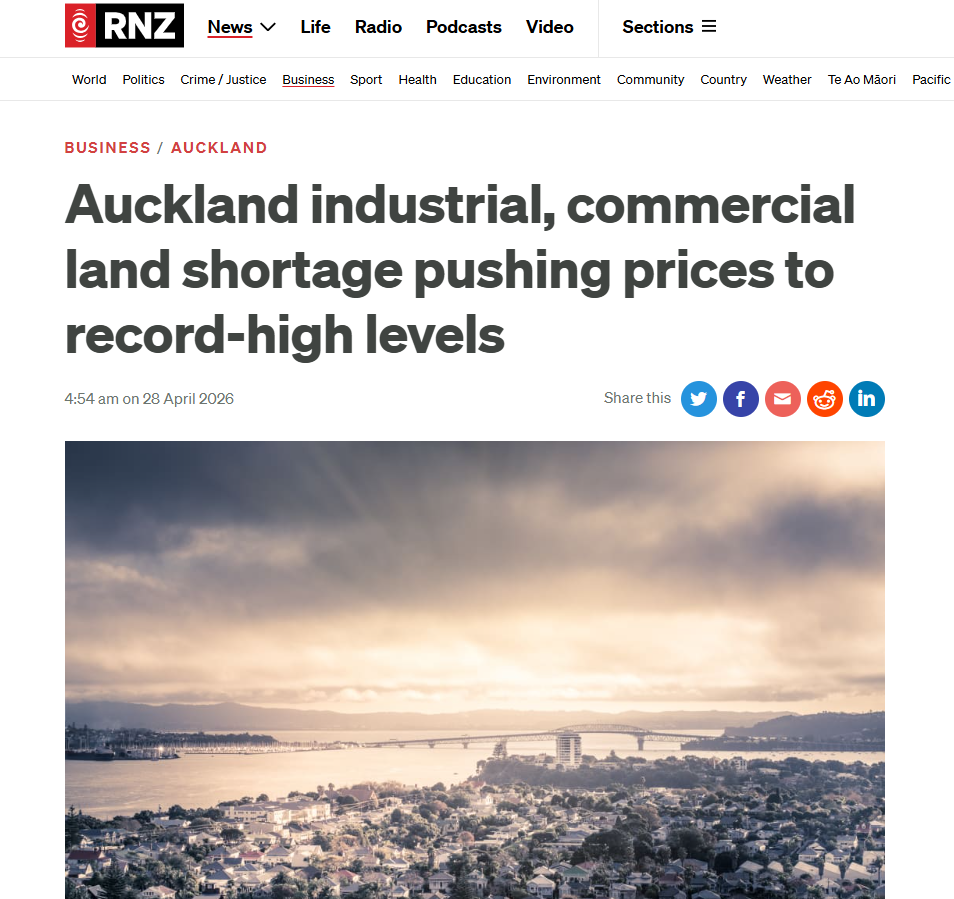
The story has appeared in commercial and business media, highlighting the increasing national attention on Auckland’s industrial land constraints.
Property PR and Market Communications Support
For businesses operating in property, construction, infrastructure, logistics and industrial development, market conditions like these create a need for clear public communication. Investors, tenants, customers and local communities all need to understand why land supply, zoning and infrastructure decisions matter. Impact PR works with businesses across the property and infrastructure sectors to turn complex market data into credible media stories, thought leadership and stakeholder communications. As one of the top PR agencies new zealand businesses turn to, Impact PR helps organisations explain economic trends in a way that is newsworthy, accurate and commercially useful. This includes media relations, executive profiling, market commentary, issues management and SEO-focused digital content for property-related brands.