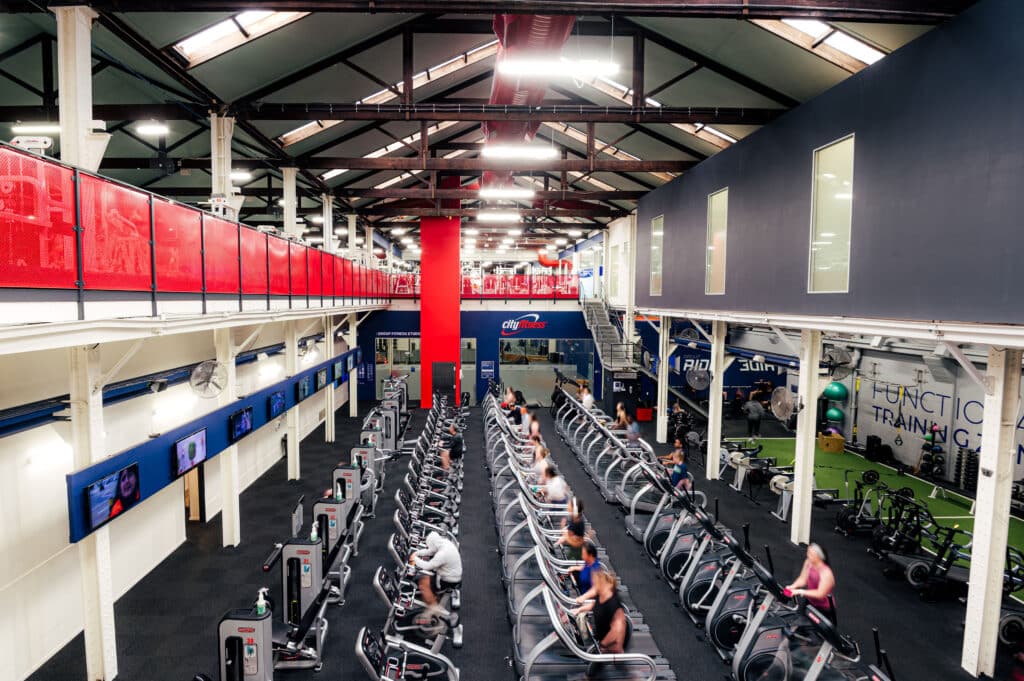
CityFitness expansion: $100m gym rollout could create 1,000 jobs
New Zealand’s largest gym chain is planning to invest up to $100 million in a nationwide rollout that could create 1,000 jobs, with new regional clubs and an entry into the women-only fitness market.
The CityFitness expansion will see up to 50 new facilities developed over the next five years, potentially taking the operator beyond 100 locations. The programme also includes further investment in existing clubs and the growth of its premium Simplicity Fitness network.
The plans, which featured on 1news, come as CityFitness operates 66 branches, with more than 260,000 members and around 1,200 staff and contractors.
CityFitness chief operating officer Doug Hatten says the investment reflects growing demand for affordable exercise options and a need to provide facilities in communities where choice is limited.
“We’re not just growing our footprint, we’re making a long-term commitment to the health of New Zealanders,” says Hatten.
“Our goal is to ensure more communities have access to high-quality, low-cost fitness facilities. We’re focused on making fitness accessible to everyone, regardless of location, income or background.”
CityFitness plans to invest up to $100 million in new and upgraded fitness facilities across New Zealand.
CityFitness expansion to target regional centres
Under the CityFitness expansion, the company will look for sites serving populations of about 30,000 to 40,000 people within a 5km to 10km radius. Locations will be assessed against existing gym provision and evidence of local demand.
Each additional club is expected to employ about 20 people. The rollout could bring employment opportunities to regional centres as well as cities.
New clubs are planned for Newmarket in Auckland, Papamoa in the Bay of Plenty, Courtenay Place in Wellington and Pukekohe during 2026/27. The CityFitness expansion also includes relocations and new formats at established clubs.
In Christchurch, a new Simplicity Fitness club is planned for Moorhouse Avenue, with another proposed for Fraser Cove in Tauranga. CityFitness is also preparing a larger Nelson CBD club and a move to new premises in Upper Hutt, where its current site will be converted into a Simplicity Fitness facility.
Recent relocations include Blenheim, Petone and Lyall Bay, while further upgrades will address ageing facilities and growing demand.
Women-only gyms become part of CityFitness expansion
A major feature of the CityFitness expansion is the introduction of CityFitness Women, a dedicated gym format designed for women who would prefer not to train in a conventional mixed facility. The first club is due to open in Christchurch in the coming weeks, with several more planned around New Zealand.
The new facilities will be based on the smaller Simplicity Fitness model but will include a multipurpose studio and group fitness. Hatten says membership patterns have changed over the past decade, with rising participation among younger men contributing to demand for different types of training environments.
“Strong growth in younger men participating in the sector is one of the trends creating greater demand for women-only spaces, and we see that as a meaningful opportunity to broaden the range of environments available to New Zealanders.”
The strategy would give the chain three distinct offerings: large full-service CityFitness clubs, smaller Simplicity Fitness centres and dedicated women-only gyms. The different formats are intended to meet changing member preferences.
Existing gyms in line for investment and new services
Although the CityFitness expansion includes an extensive building programme, Hatten says improvements to established clubs remain a priority. Some sites will be enlarged or relocated while others will receive newer equipment and refreshed facilities.
“We don’t want growth to simply mean opening more sites. Existing members need to see the benefit of that investment as well,” he says.
The company is also developing services beyond conventional gym floors, including areas for stretching and recovery, small group sessions and virtual fitness offerings. Plans include massage chairs, meditation rooms, saunas and reformer Pilates, alongside remote access and monitoring for after-hours users.
Hatten says the intention is to accommodate a wider mix of members, from teenagers through to people in their 90s, as exercise becomes increasingly connected with general wellbeing.
1news featured CityFitness’s plans to invest up to $100 million in new gyms, creating up to 1,000 jobs nationwide.
Physical inactivity presents wider challenge for New Zealand
The company believes the CityFitness expansion comes at a time when there is considerable scope to increase participation in regular exercise. Hatten says about 21% of adults in New Zealand’s urban areas belong to a fitness centre, compared with 34% in Sweden.
He also points to figures indicating 54% of New Zealand adults fail to meet minimum physical activity guidelines. According to Exercise New Zealand estimates cited by the company, physical inactivity costs the public health system more than $600 million annually, with lost productivity exceeding $2.3 billion.
The World Health Organization’s physical activity guidelines recommend adults undertake at least 150 to 300 minutes of moderate-intensity aerobic activity each week, or an equivalent level of vigorous activity. The guidelines underline the importance of regular movement for long-term health.
For CityFitness, increasing the number and variety of clubs is one way to reduce practical barriers to exercise. Founded in Porirua in 2000, CityFitness has grown through affordable memberships and convenient locations.
Hatten says the CityFitness expansion is not intended to end when the network reaches 100 clubs.
“It’s not about reaching 100 clubs and stopping, it’s just the next milestone. We’ll continue growing wherever there’s demand.”
Impact PR and communication in the fitness and health sector
Large-scale investment in fitness facilities raises issues that extend beyond the number of new clubs opening. Employment opportunities, access to exercise and changing consumer needs are all important parts of the wider story. Effective media relations can help fitness businesses explain these developments to local communities and national audiences. As a health communications agency, Impact PR helps organisations communicate health-related information in a way that connects commercial developments with issues of public interest. Clear, evidence-based communication can also support public education, reputation and awareness as businesses enter new markets. The CityFitness expansion demonstrates how an investment announcement can also bring attention to the broader challenges of physical inactivity and access to fitness facilities.