Digital-First Model Reshapes Grocery Competition in New Zealand
A rapidly expanding online retailer is demonstrating how a digital-first model could intensify grocery competition in New Zealand without the cost of building supermarkets across the country.
Paddock to Pantry, which recently featured on 1News, says its centralised warehousing and e-commerce operation is allowing it to serve customers nationwide while maintaining a much smaller property footprint than a conventional supermarket chain. The family-owned business recorded a 197% increase in sales in the 12 months to 31 July 2026, from a multi-million-dollar sales base.
The company is also introducing consistent grocery pricing across New Zealand, regardless of where customers live. Its own analysis of a 30-item basket found prices at supermarkets operating under the same brand could differ by as much as 32% between regions.
Paddock to Pantry is expanding its nationwide online grocery operation through centralised warehousing and fulfilment.
Digital Scale Adds to Grocery Competition in New Zealand
Three years ago, Paddock to Pantry had almost no mainstream direct-to-consumer grocery operation. It now processes thousands of orders each day, stocks more than 2,000 products and delivers throughout New Zealand.
Warehouse capacity has expanded from fewer than 50 pallet bays to more than 700, while its same-day delivery fleet is expected to increase from four vehicles to six by the end of 2026. Business manager John Kennerley says the expansion shows how online retail can change some of the traditional economics of entering the grocery sector.
“E-commerce changes that equation – we can operate from centralised infrastructure, reach customers nationally and build purchasing volume without having to replicate the enormous property footprint of a conventional supermarket chain.
“That creates the potential for a very different form of grocery competition in New Zealand,” he says.
Wholesale Reforms Help Independent Retailers Build Scale
Paddock to Pantry attributes part of its growth to wholesale access arrangements introduced through Government grocery competition reforms. Kennerley says those arrangements enabled the business to build enough volume to begin negotiating directly with major manufacturers.
The Commerce Commission says the wholesale supply regime is intended to make it easier for businesses to enter grocery retail and support the growth of existing retailers. That policy setting is particularly relevant to grocery competition in New Zealand because new entrants need access to products at prices that allow them to compete with established chains.
More than 99% of Paddock to Pantry’s purchasing by value is now sourced directly from manufacturers. The company says its sales volumes exceed those of many individual supermarkets and that it reached this position without external investors.
“From there we’ve done the hard work of negotiating directly with suppliers and building the infrastructure ourselves, but without that initial intervention the same process could easily have taken many years.”
National Pricing Targets Regional Grocery Price Differences
The retailer is now trying to reposition itself from its earlier gourmet food image towards everyday supermarket shopping. Its pricing strategy focuses on frequently purchased products such as butter, milk and flour, with no loyalty card or subscription required.
An initial comparison by the company found its selected basket was up to 18% cheaper than the major supermarkets when the prices were collected. Paddock to Pantry says the same prices apply nationwide, adding another dimension to grocery competition in New Zealand.
The business is also seeking to change established shopping behaviour. Brand manager Anna Kennerley says customers often begin with a meat special or a smaller trial order, then gradually add more everyday groceries as they become familiar with the service.
“Eventually you’re seeing customers placing $300-plus orders and using Paddock to Pantry for their normal supermarket shop. That’s the behaviour we’re trying to accelerate with this next phase,” she says.
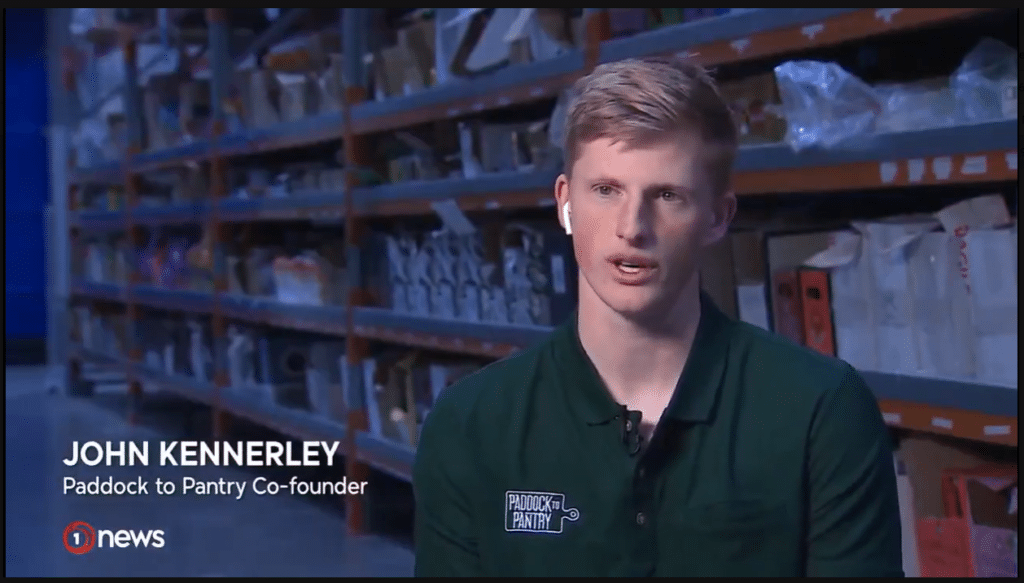
1News featured Paddock to Pantry and its emerging role in New Zealand’s grocery retail market.
What Digital Retail Could Mean for Grocery Competition in New Zealand
Paddock to Pantry argues that the next phase of grocery competition in New Zealand does not necessarily depend on attracting a large overseas supermarket operator. Instead, it believes regional businesses, independent retailers and digital operators could collectively take a larger share of the market.
“The economics of grocery retail are changing. Digital retailers can reach customers nationally without having a supermarket on every corner.
“Competition can come from regional businesses and independents like us all taking a bigger share of the market. The competitors are already here. The focus now should be on making it easier for them to grow,” he says.
Whether digital retailers can gain enough scale to materially alter grocery competition in New Zealand will depend on factors including pricing, supply access, consumer trust and the willingness of shoppers to change long-established habits. Paddock to Pantry’s recent growth nevertheless provides an example of how online fulfilment can create a different path into a market traditionally dominated by large physical networks.
PR Support for New Zealand Retail and Consumer Businesses
Changes in grocery competition in New Zealand create communication challenges as well as commercial opportunities for retailers, suppliers and consumer brands. Businesses entering established markets need to explain clearly what is different about their model and why that difference matters to customers. Effective media relations can help companies communicate pricing, growth, innovation and market developments in a way that is credible and easy for audiences to understand. Reputation management also becomes important when businesses are challenging entrenched competitors or asking consumers to change familiar purchasing habits. Clear public explanation is especially important when grocery competition in New Zealand is evolving. Impact PR provides corporate media relations support for New Zealand businesses seeking to build awareness, explain complex commercial developments and strengthen their public profile. For growing retailers, sustained communication can also support customer education, stakeholder understanding and wider recognition as the competitive landscape evolves.