
Tokenised Property Investment New Zealand Model Opens Door to Residential Development
A tokenised property investment New Zealand model is set to reshape access to residential development, allowing everyday investors to take part in one of the country’s most exclusive asset classes.
The approach follows new guidance from the Financial Markets Authority, which has clarified how tokenisation can operate within New Zealand’s existing regulatory framework. The model enables individuals to buy shares in residential developments and receive a proportionate return when projects are completed and sold.

Tokenised Property Investment New Zealand Gains Regulatory Clarity
The Financial Markets Authority has confirmed the model falls within an exemption under the Financial Markets Conduct Act, meaning it does not require a market operator licence. This removes a key regulatory barrier and creates a pathway for tokenised investment platforms to launch.
The guidance follows a broader consultation process examining how tokenisation could support innovation in financial markets.
According to Deloitte, tokenisation is expected to transform global real estate markets, with trillions of dollars in assets projected to be digitised over the coming decade.
Opening Access to Property Development Profits
Under the tokenised property investment New Zealand model, investors purchase equity in a Special Purpose Vehicle linked to a residential development. The platform manages the full cycle from land acquisition through to construction and sale.
Dehardt van der Merwe, founder of Propopoly, says the model is designed to lower entry barriers.
“This new FMA guidance is significant as it removes a major compliance barrier and enables the first practical pathway to support the introduction of a tokenised real estate investment model to New Zealand. This approach enables fractional ownership of residential development projects, meaning individual Kiwis can purchase a small share in a property venture,” he says.
Investors can participate with as little as $500, significantly expanding access compared with traditional property investment.
Addressing Declining Home Ownership
The introduction of tokenised property investment New Zealand comes at a time when home ownership rates continue to fall. Census data shows ownership has declined from 74 percent in 1991 to around 66 percent today.
Younger New Zealanders have been most affected, with fewer than 40 percent of people aged 25 to 34 owning a home.
Rising prices, tighter lending conditions and stagnant wages have limited access to both ownership and development opportunities.
Van der Merwe says the model is designed to change that dynamic.
“Most New Zealanders are permanently excluded from the value-creation cycle of property development.
“Our mission is not just to turn renters into owners. It is to let excluded New Zealanders co-own, co-invest and co-create the future of their cities. That is shared growth, not just ownership,” he says.
Global Momentum Behind Tokenisation
Internationally, tokenised real estate is gaining traction as a way to improve liquidity and accessibility in traditionally illiquid markets.
Examples include large-scale developments in North America and government-backed initiatives in the Middle East aimed at mainstreaming fractional property ownership.
The tokenised property investment New Zealand model positions the country to participate in this shift, while ensuring local investors remain the primary beneficiaries.
Pipeline of Residential Development Projects
The platform is expected to launch multiple developments, with initial plans to deliver hundreds of homes over the coming years.
The first project aims to raise up to $1.6 million and involve thousands of investors, demonstrating the scale of participation possible under the model.
Future expansion is expected across Auckland and other regions, contributing to housing supply while providing new investment pathways.
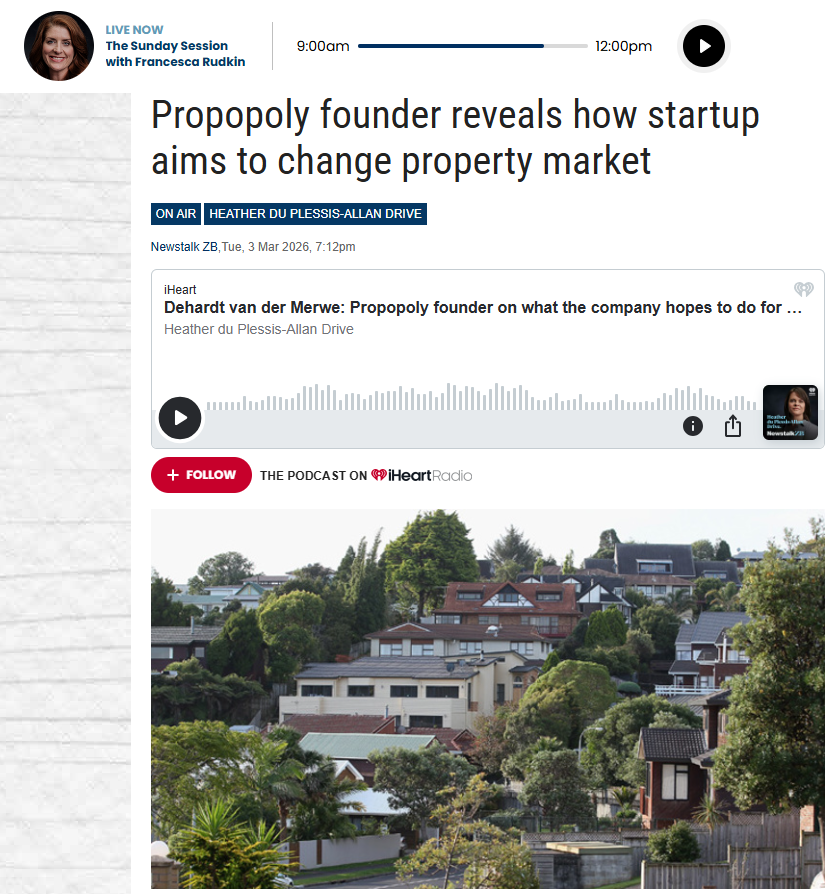
Media Coverage Highlights Market Disruption
The initiative has attracted national attention, with coverage appearing in NZ Herald, reflecting growing interest in alternative models for property investment and housing supply.
The Role of Strategic Communications in Financial Innovation
As new financial models emerge, clear communication becomes critical to building trust and understanding among investors and regulators.
Impact PR works with businesses operating at the intersection of finance, technology and property to position complex models in a way that resonates with mainstream audiences. As a firm often engaged by organisations navigating change, including those seeking support from experienced public relations specialists in New Zealand, the focus is on translating innovation into clear commercial narratives.
This includes explaining how new structures operate, highlighting both risks and opportunities, and ensuring media coverage reflects the broader economic context.
In areas like tokenisation, where public understanding is still developing, strong communication plays a direct role in adoption and credibility.
Impact PR’s experience across fintech, property and investment sectors ensures clients are positioned as credible participants in emerging markets.