
Refrigerant Recycling New Zealand Model Supports Emissions Targets and Supply Security
A new refrigerant recycling New Zealand initiative is set to play a critical role in helping the country meet its international climate obligations while reducing reliance on imported gases.
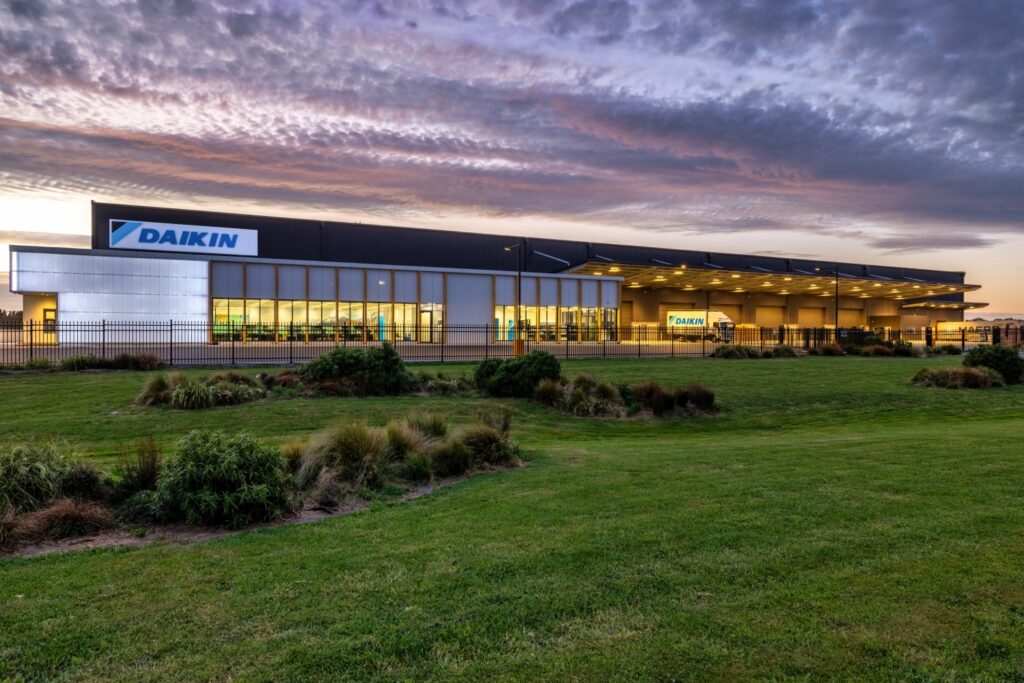
The model, embedded within a multi-million-dollar Christchurch facility, captures and reuses refrigerants from end-of-life heat pumps, creating a circular supply chain for gases that are among the most climate-damaging substances used in buildings.
Refrigerant Recycling New Zealand Addresses High-Impact Emissions
Government data shows refrigerants such as hydrofluorocarbons account for around two percent of New Zealand’s total greenhouse gas emissions. While relatively small in volume, these gases have global warming impacts hundreds to thousands of times higher than carbon dioxide.
Within that share, heating, ventilation, air conditioning and refrigeration systems contribute approximately 94 percent of emissions, making the building sector a key focus area for reduction efforts.
According to the United Nations Environment Programme, phasing down high global warming potential refrigerants is essential to limiting global temperature rise.
Meeting Montreal Protocol and Kigali Amendment Targets
New Zealand has committed to phasing down high global warming potential refrigerants by more than 80 percent by 2037 under the Kigali Amendment to the Montreal Protocol.
Domestic regulations introduced since 2019 have already tightened controls on refrigerant imports, including permit requirements and progressively lower caps on hydrofluorocarbon supply.
This is creating both supply constraints and rising costs for building owners and operators.
Ryuta Hayashibara, managing director of Daikin New Zealand, says refrigerant management is becoming a commercial issue as much as an environmental one.
“As supply caps tighten and emissions pricing is applied, the cost of servicing and replacing high global warming potential refrigerants is rising.
“That creates a strong business case for treating refrigerant management as part of long-term asset planning, not just an environmental issue.
“Developing a model that works operationally and commercially is essential if the sector is going to scale,” he says.
Closed-Loop Model Reduces Reliance on Imports
The refrigerant recycling New Zealand model operates through a nationwide network of accredited installers who recover gases from end-of-life systems before they enter the waste stream.
These gases are then cleaned to international purity standards and reused in new and existing systems, creating a closed-loop supply chain.
The Christchurch facility is estimated to operate with around 40 kilograms of reclaimed refrigerant, equivalent to up to 90 residential heat pumps.
Carbon Reduction and Efficiency Gains
Independent lifecycle analysis shows reclaimed refrigerant can reduce the carbon footprint of supply by between 72 and 90 percent compared with producing and importing new gases.
Ryan Philp, head of sustainability at Daikin New Zealand, says the focus is on preventing emissions at the most critical points.
“If a similar approach were adopted across a few hundred large commercial and industrial buildings, it could displace X tonnes of virgin refrigerant annually.
“Depending on how that gas would otherwise be handled at end of life, that equates to tens of thousands of tonnes of carbon dioxide equivalent avoided using common high global warming potential refrigerants as a reference point,” he says.
Scaling the Model Across the Built Environment
The refrigerant recycling New Zealand approach has been recognised under the Green Star innovation framework, positioning it as a replicable model for large-scale commercial developments.
Applications could extend to hospitals, data centres and major infrastructure projects where refrigerant volumes are significant.
The Christchurch facility itself consolidates operations into a single hub, incorporating a fully electric design, rooftop solar generation and advanced HVAC systems.
It also includes a dedicated training academy to support workforce development as the sector transitions toward electrified heating systems and stricter refrigerant handling requirements.
Media Coverage Highlights Industry Shift
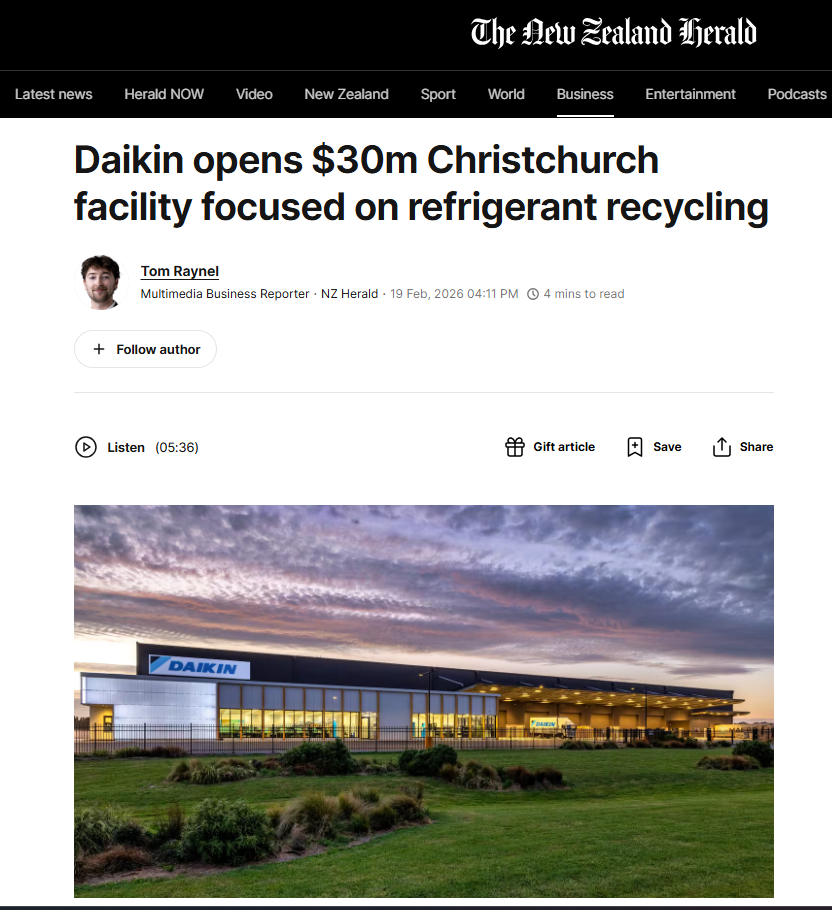
The initiative has attracted national attention, with coverage appearing in the National Business Review (NBR), reflecting growing interest in practical solutions to emissions reduction in the building sector.
The Role of Strategic Communications in Infrastructure and Sustainability
As regulatory pressure increases, infrastructure and engineering projects are becoming more complex to communicate. Translating technical initiatives like refrigerant recycling into clear commercial and environmental narratives is critical.
Impact PR is one of the top PR agencies new zealand businesses turn to when communicating large-scale infrastructure, sustainability and industrial innovation projects.
The agency works with organisations to position technical developments in a way that resonates with policymakers, industry stakeholders and the media. This includes highlighting both economic and environmental outcomes to support broader adoption.
In sectors like construction and building services, where regulation and cost pressures are increasing, effective communication can influence both market perception and investment decisions.
Impact PR’s experience across infrastructure, energy and sustainability ensures projects are positioned not just as compliance initiatives but as commercially viable solutions.