
Global Food Ingredient Giant in $15m NZ Expansion as Demand for Third Culture Cuisine Surges
A global food ingredient supplier is investing more than $15 million into a major New Zealand expansion as shifting consumer tastes and the rise of third culture cuisine drive demand for new flavours, spices and functional ingredients.
The investment reflects a broader transformation underway across the food manufacturing and hospitality sectors, with younger consumers reshaping what products are developed, how flavours are sourced and the scale required to support innovation.
At the centre of the expansion is multinational food ingredient company Langdon, which operates across seven countries and supplies a wide range of spices, botanicals and natural powders to food manufacturers and food service businesses.

Food ingredient demand driven by third culture cuisine
Third culture cuisine refers to dishes created by people raised across two or more cultures who blend their family heritage with the food traditions of the country they grow up in. What was once a niche influence has now moved into mainstream manufacturing.
This shift is being accelerated by social media platforms where Gen Z consumers are discovering global flavours through food challenges, short form video and multicultural peer groups rather than traditional home cooking.
Kenny Pihema, Langdon New Zealand country manager, says the way young consumers interact with food has fundamentally changed the food ingredient landscape.
“Gen Z are the first generation to discover new flavours online rather than at home. Many are trying chillies, spices and global cuisines for the first time through TikTok and multicultural networks. That discovery loop is completely different from older generations and it is rapidly reshaping what manufacturers need,” he says.
$15m expansion delivers scale for food ingredient innovation
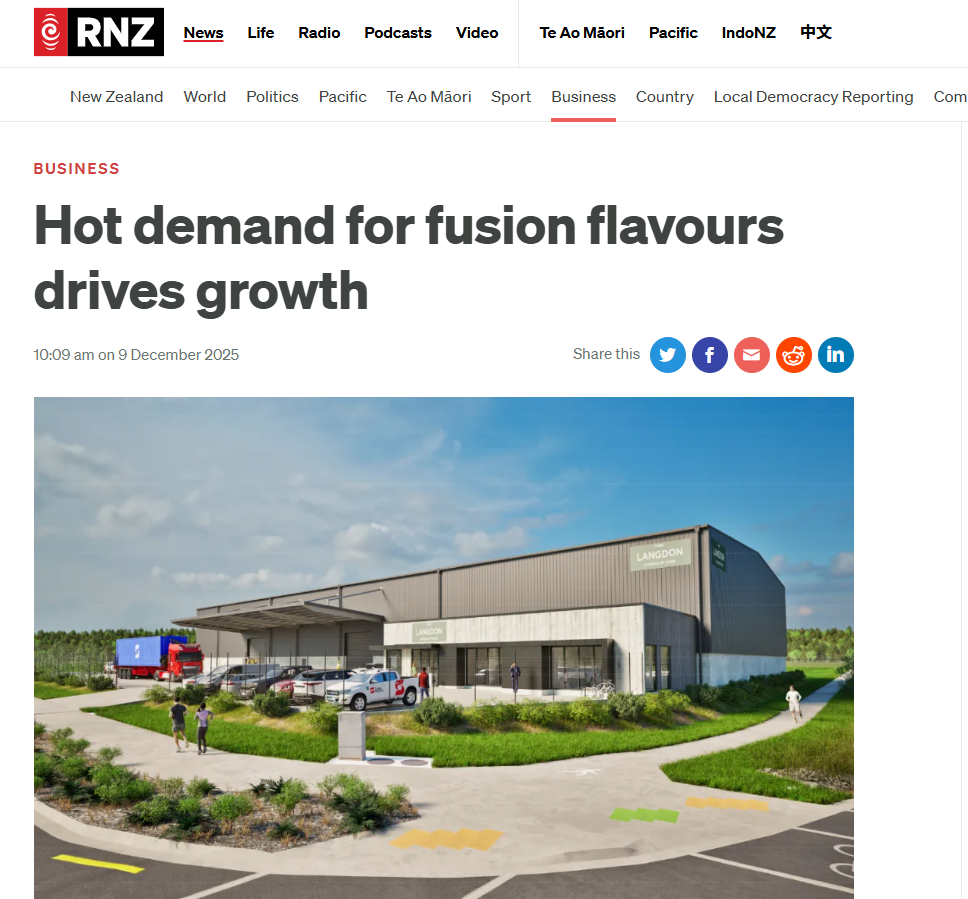
To support this shift, Langdon has commissioned Calder Stewart to develop a new 3,500 square metre warehousing and distribution facility at the Drury South Crossing industrial precinct in South Auckland.
The facility includes a 3,000 square metre warehouse and 500 square metres of office and canopy space, more than doubling the capacity of Langdon’s previous Mount Wellington operation.
Pihema says the scale is essential if New Zealand food manufacturers are to keep pace with global trends.
“Thirty years ago we supplied only a handful of chilli varieties. Today we supply more than 30 formats and varieties. Our Australian pantry carries more than 2,500 food ingredient products. New Zealand is not at that scale yet, but this expansion takes us a long way toward supporting the diversity manufacturers now require,” he says.
Gen Z reshaping heat, spice and flavour profiles
Heat profiles, named chillies and new aromatics have moved rapidly from novelty to mainstream as Gen Z consumers experiment with flavour at unprecedented levels.
“Heat is exploding. Younger consumers are driving chilli culture and experimenting in ways we have never seen before. That appetite flows directly into restaurant menus, packaged food and export products,” Pihema says.
Langdon’s customer base is evenly split between food manufacturing and hospitality, both of which are showing signs of renewed momentum after several challenging years.
Beyond flavour, Pihema says nutrition, gut health and clean label requirements are also influencing food ingredient demand.
“Consumers are more selective about where they spend their money but they are willing to invest in quality and experience. That influences what chefs create and what manufacturers produce, and it flows back into the ingredients we need to supply,” he says.
Purpose built facility protects food ingredient integrity
Construction of the new facility is scheduled to begin in March with completion expected in November next year. The building has been designed specifically to manage sensitive aromatic products at scale.
Calder Stewart North Island development manager Sam Smith says the warehouse includes controlled aromatic zones and humidity management systems.
“When you are handling ingredients like spices, chillies and coffee, aroma transfer into dairy or bakery inputs is a real risk. Separation zones and climate control protect food ingredient integrity and support the innovation manufacturers are delivering,” he says.
Why Drury is emerging as a strategic food hub
Smith says Drury offered strong commercial and operational advantages.
“A similar build in Mangere, Wiri or East Tamaki would cost around 30 to 40 percent more in annual rent. Drury provides long term value while still offering excellent access to transport networks and customers,” he says.
The higher stud height of the building also delivers greater cubic capacity, aligning the New Zealand operation more closely with Langdon’s flagship Australian warehouse.
The story has appeared in national media including NZ Herald and Stuff, reflecting growing interest in how consumer taste is reshaping industrial development.
Broader analysis of how Gen Z food trends are influencing global supply chains has been reported by BBC Future.
Impact PR perspective
Consumer taste now moves faster than traditional manufacturing cycles. At Impact PR, we help food ingredient suppliers and manufacturers explain why investment, expansion and infrastructure change are necessary.
As one of the PR agencies New Zealand food businesses turn to during periods of growth, we focus on clarity, credibility and commercial context.
Our experience spans food production, sustainability, logistics and industrial development, allowing us to position expansion projects within wider economic and cultural shifts.
By connecting consumer behaviour with supply chain investment, we help businesses demonstrate relevance and long term value.
In a market shaped by fast moving trends, strategic communications ensure innovation is understood and trusted.