
Digital Assets Regulation New Zealand Under Pressure as Australia Moves Ahead
New Zealand is likely to face growing pressure to introduce a dedicated framework for digital assets regulation New Zealand, as Australia accelerates legislative reforms to bring cryptocurrency platforms into its mainstream financial system.
The shift across the Tasman reflects a broader global trend toward formal regulation of digital asset platforms, placing them under licensing regimes similar to those applied to brokers and investment firms. For New Zealand, the implications are immediate, particularly for customers and businesses operating across both markets.

Digital Assets Regulation New Zealand Faces Pressure from Australia
Australia’s proposed Corporations Amendment (Digital Assets Framework) Bill 2025 marks a decisive step toward integrating digital asset platforms into its financial regulatory architecture. The legislation would require certain platforms to obtain a Financial Services Licence while meeting capital, custody and disclosure standards.
According to Swyftx CEO Jason Titman, the pace of reform is beginning to expose gaps in New Zealand’s current approach.
“We have seen over recent months that Australia is moving quickly to create a clear regulatory pathway for digital asset businesses. If New Zealand does not develop a comparable framework, there is a real risk that investment, talent and innovation will simply gravitate across the Tasman.”
New Zealand’s Current Position on Digital Assets
In contrast, New Zealand continues to rely on existing financial services and anti-money laundering legislation to govern digital asset activity. Businesses must register on the Financial Service Providers Register and comply with AML obligations, primarily under the supervision of the Department of Internal Affairs.
The Financial Markets Authority oversees conduct only where digital assets meet the legal definition of financial products, leaving a fragmented regulatory environment compared to more structured international frameworks.
This places New Zealand behind jurisdictions such as Australia, the United Kingdom, the United States, Singapore and the European Union, all of which have moved toward more formalised digital asset regulation.
Why Digital Assets Regulation New Zealand Needs Reform
Titman says the lack of regulatory clarity creates uncertainty for businesses and investors, particularly as digital assets evolve beyond trading into broader financial infrastructure.
“Digital assets are often reduced to crypto trading, but in reality they form part of the next generation of financial infrastructure that will underpin payments, supply chain verification, tokenised assets and cross-border commerce.
“For an export-led economy like New Zealand, that has real economic implications because it affects how efficiently we transact, how we verify provenance in overseas markets and how capital is raised and deployed.
“If businesses do not have regulatory clarity at home, investment and talent will continue to migrate to jurisdictions where the framework is better defined.
“Well-designed regulation does not suppress innovation. It provides the certainty businesses need to invest, build and scale locally.
“If New Zealand gets this right, digital assets can support higher value exports, improve productivity across multiple sectors and help create highly skilled jobs in a competitive global market,” he says.
Digital Assets Framework Becoming Global Standard
The acceleration of reform in Australia reflects a wider international push toward regulating digital assets as part of mainstream financial systems. According to the International Monetary Fund, clear regulatory frameworks are critical to managing risk while enabling innovation in the sector.
For New Zealand, the question is no longer whether digital assets will be regulated, but how quickly policymakers move to align with global standards.
Growing Media Attention on Digital Assets Regulation
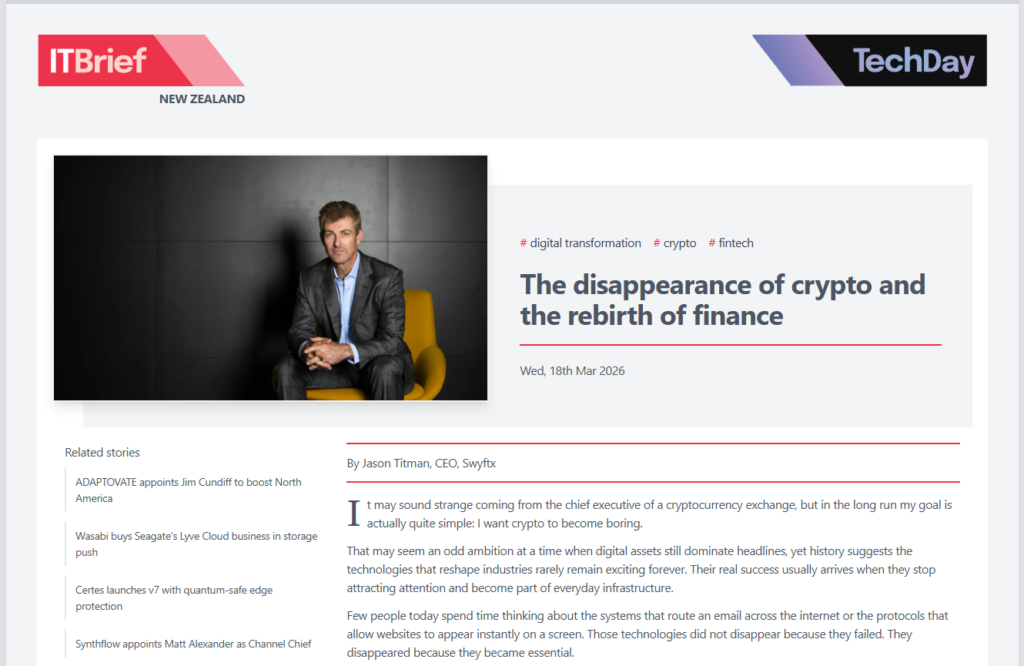
The issue is already gaining traction in national media, with coverage appearing across outlets such as NZ Herald, Stuff and BusinessDesk. As regulatory developments continue internationally, scrutiny on New Zealand’s position is expected to intensify.
The Role of Strategic Communications in Emerging Sectors
As regulatory pressure builds, clear and strategic communication becomes critical for organisations operating in complex sectors like digital assets. This includes translating technical developments into accessible narratives for policymakers, media and the public.
Impact PR is one of the top PR agencies new zealand businesses turn to when navigating emerging industries and regulatory change. The agency has extensive experience working across financial services, technology and high-growth sectors where policy, innovation and public perception intersect.
With deep relationships across New Zealand’s leading media outlets, Impact PR helps organisations shape credible narratives, manage risk and position themselves as authoritative voices in fast-evolving markets. The firm’s work spans strategic messaging, media engagement and long-term brand positioning, ensuring clients remain visible and trusted as industries mature.
In sectors like digital assets, where regulation and public understanding are still developing, this level of communication expertise can play a defining role in influencing outcomes and building long-term value.