
AI Regulation New Zealand Urgently Needed as EU Rules Reshape Global Standards
AI regulation New Zealand is coming under increasing scrutiny as new European rules begin to reshape how artificial intelligence is governed globally, raising concerns about sovereignty, compliance and control.
Industry experts warn that without a dedicated legislative framework, New Zealand risks falling behind major economies and losing influence over how artificial intelligence is deployed across critical sectors including health, education and justice.
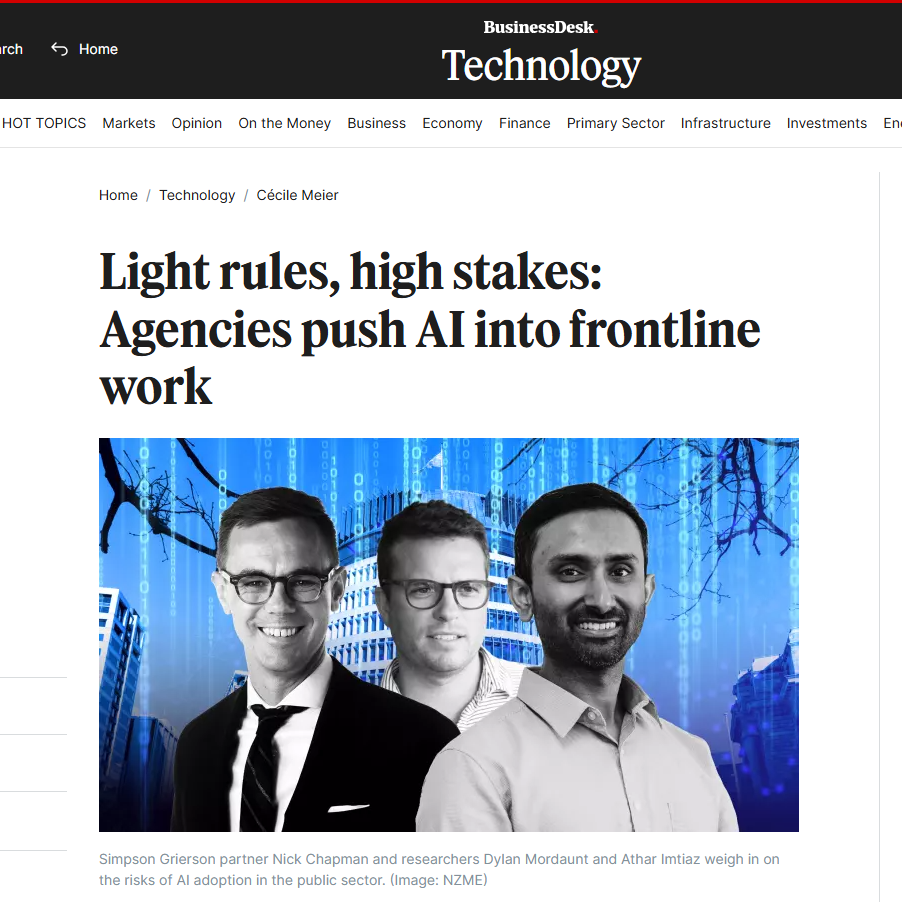
AI Regulation New Zealand Lags Behind Global Developments
The European Union’s Artificial Intelligence Act is now being phased in, with the most stringent requirements for high-risk systems set to apply from August 2026. These rules impose strict obligations around risk assessment, transparency, human oversight and accountability.
By contrast, AI regulation New Zealand currently relies on a patchwork of existing frameworks such as the Privacy Act and the Algorithm Charter for Aotearoa, with no dedicated AI law or regulator.
According to the European Commission AI Act overview, the legislation is expected to set a global benchmark for AI governance, influencing how systems are designed and deployed worldwide.
Growing Gap Between Technology and Governance
Dr Athar Imtiaz, Applied AI researcher at Massey University and AI and Data Lead at Nodero, says the pace of AI adoption is outstripping oversight.
“As our capability continues to accelerate, our governance over the technology, unfortunately, is not keeping pace.”
He says artificial intelligence is no longer confined to experimental use cases.
“When AI assists with medical triage, welfare eligibility or justice processes, it becomes part of the decision-making infrastructure.
“Most modern AI systems are probabilistic in that they generate likelihoods, not certainties. We need clear standards for acceptable error and bias testing, and validation against datasets that properly reflect New Zealand’s communities, including Māori, rather than relying solely on international training data.”
Sovereignty Risks and Dependence on Offshore Systems
AI regulation New Zealand is also being shaped by concerns around sovereignty and control. Without local capability, systems are increasingly reliant on international infrastructure and datasets.
“Most advanced AI models are trained on international datasets shaped by larger economies.
“If we rely entirely on offshore systems, we adapt ourselves to their assumptions rather than shaping them to our context.”
Dr Imtiaz says building sovereign AI capability will require significant investment in infrastructure, data environments and specialised expertise.
Global Investment Highlights New Zealand Gap
Countries including Australia, Singapore and the United Kingdom have committed substantial funding to AI capability and governance frameworks.
Mark Easton, chief executive of Nodero, says New Zealand is falling behind comparable economies.
“When major markets such as Europe set compliance thresholds, vendors design to those standards.
“If New Zealand does not define its own statutory and institutional expectations, the operating assumptions embedded in AI systems will increasingly be shaped elsewhere.”
He says New Zealand must also consider its unique legal and cultural context.
“Māori data sovereignty principles emphasise guardianship and collective rights over data.
“An imported regulatory model will not automatically reflect those obligations.
“We should not simply copy Europe, we have the opportunity to design a framework that reflects New Zealand’s legal system, social expectations and Treaty commitments.”

Infrastructure, Risk and National Resilience
AI systems are increasingly embedded in essential services, raising questions about infrastructure resilience and jurisdictional control.
“The key questions are who controls model training, who audits outputs and which jurisdiction ultimately sets the compliance standards.
“If critical government systems are hosted or processed overseas, New Zealand inherits the resilience profile of that infrastructure.”
Dr Imtiaz says the same level of planning applied to energy and water infrastructure should now apply to AI systems.
Media Coverage Highlights National Importance
The issue has attracted national attention, with coverage appearing in NZ Herald, reflecting growing concern about the pace of AI adoption and the need for regulatory clarity.
The Role of Strategic Communications in AI Policy
As AI regulation New Zealand evolves, clear communication will be essential to bridge the gap between technical complexity and public understanding.
Impact PR works with organisations at the intersection of technology, policy and innovation to ensure emerging issues are communicated clearly and credibly. Many organisations navigating these challenges engage experienced PR professionals in New Zealand to help shape narratives around complex regulatory environments.
This includes translating technical concepts into accessible language, supporting media engagement and ensuring balanced coverage of both risks and opportunities.
In areas like artificial intelligence, where public trust is still developing, effective communication plays a central role in shaping both policy outcomes and adoption.
Impact PR’s experience across technology and regulatory sectors ensures organisations are positioned to lead informed conversations as the landscape evolves.