
AI Home Renovation Designs and Reality TV Creating Risk for Kiwi Homeowners
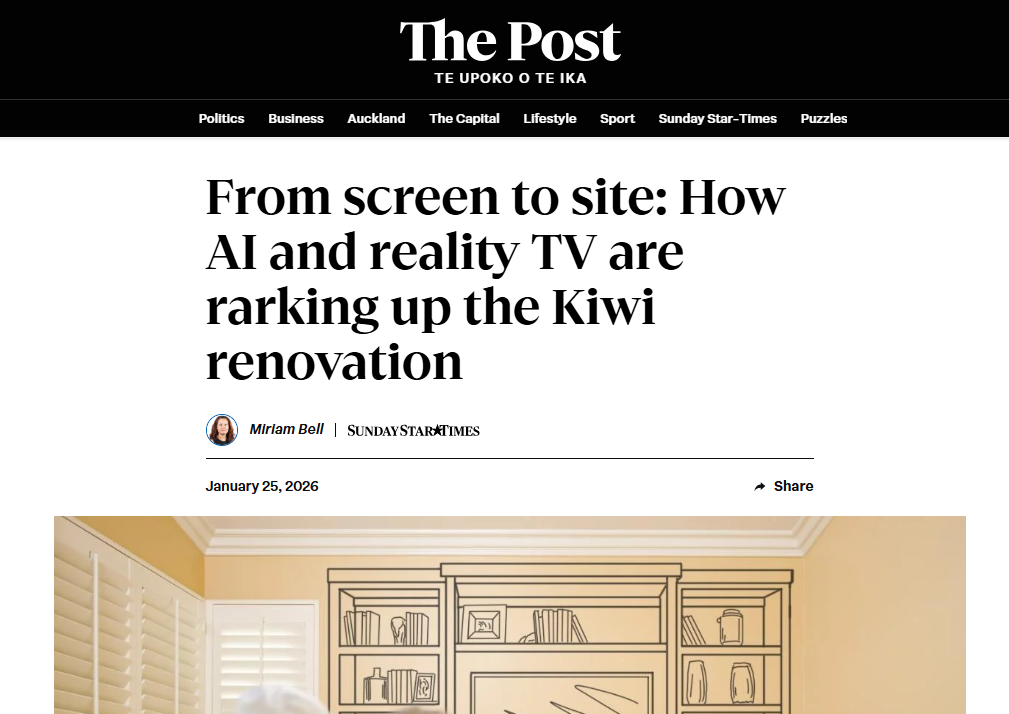
The rise of AI home renovation designs and reality television makeover shows is creating a growing gap between expectation and reality for Kiwi homeowners, according to a leading construction expert.
While digital tools can generate visually impressive concepts in seconds and renovation shows present dramatic transformations within a single episode, builders on the ground say the real world of compliance, structural planning and council approvals is far more complex.
Reagan Langeveld, director of Symphony Construction and a Master Builders gold award winner, says homeowners relying too heavily on AI-generated visuals and television timelines are exposing themselves to avoidable financial and compliance risks.
Why AI Home Renovation Designs Are Not the Full Picture
Langeveld says digital design platforms are often mistaken for practical building plans.
“AI can generate a perfect room but it cannot tell you what is inside your walls or whether your local council sees the work as exempt from resource consents. It has no understanding of load paths, moisture management or plumbing locations and it cannot flag when a design triggers additional compliance in one region but not in another.
“As a result, homeowners are being shown digital concepts and edited television timelines that ignore the complexities of structural planning, waterproofing standards, trades coordination and regulatory obligations.
“Reality TV renovation shows add to the problem by making construction look fast and simple. What you see on screen is the highlight reel. Behind the scenes there are engineers, inspectors and weeks of preparation that never make it to air. None of it reflects the actual process for renovating or building a home,” he says.
According to Building Performance New Zealand, compliance with the Building Code requires detailed attention to structural integrity, weather tightness, plumbing and ventilation standards. These are elements that cannot be resolved through visual design software alone.
The Reality Behind Renovation Complexity in New Zealand
Langeveld says the surge in AI home renovation designs has led some homeowners to believe construction is simply about choosing a style from a digital catalogue.
“These tools skip the messy parts. They do not know what is structurally possible and don’t factor in how the plumbing and ventilation will actually run through a house. They can show homeowners a flawless visual but they cannot tell them how to build it, how long it will take or what compliance steps sit in the background,” he says.
Builders are increasingly being presented with AI-generated renovation plans that cannot be executed without major redesign. Common issues include layouts that disrupt bracing lines, cabinetry that obstructs structural fixings and bathroom designs that conflict with existing plumbing infrastructure.
“Homeowners come to us with beautiful digital images that look achievable at first glance, but once you strip back the layers you find structural conflicts, missing drainage, or design elements that are impossible to deliver safely,” he says.
How Reality TV Fuels Unrealistic Expectations
Renovation shows are designed for entertainment, not education. Overseas research indicates that televised makeovers frequently compress timelines, rely on off-camera labour and benefit from subsidised materials. Viewers are rarely shown the engineering assessments, inspection processes or sequencing of trades required to complete a compliant project.
“When people watch a bathroom or kitchen transformation completed between ad breaks, they naturally assume the real thing should be just as straightforward. They do not see the engineering reviews, the sequencing of trades or the inspections that make up the bulk of a real project.”
Langeveld describes the combination of AI visualisation and television editing as creating a renovation optimism bias.
“It creates a gap between expectation and reality that always lands on the homeowner. They are basing decisions on a fantasy workflow that does not exist outside of an app or a television set.”
Why Professional Advice Still Matters
The expert advice is clear. Before committing to a design, timeline or budget based on AI home renovation designs, homeowners should seek professional guidance.
“Talk to your builder first. It is the fastest way to understand what is possible, what is compliant and what it will really take to deliver a safe, durable and well-executed renovation.”
Engaging experienced builders early can prevent costly redesigns, consent delays and structural complications. It also ensures that projects align with local council requirements, site conditions and the practical realities of trades coordination.
This story has gained national media traction, appearing in outlets such as NZ Herald and Stuff, reflecting widespread interest in how emerging technology is influencing the property and construction market.
Impact PR: Supporting Construction and Property Sector Communications
At Impact PR, we work closely with construction leaders, property developers and building specialists navigating a rapidly evolving market shaped by technology and shifting consumer expectations. As one of the leading pr agencies new zealand construction firms turn to, we understand how to position expert voices in a crowded media landscape.
The building sector requires clear, authoritative communication. Whether addressing compliance, regulatory change or emerging trends such as AI home renovation designs, credibility is critical.
Our team has supported award-winning builders, infrastructure providers and property groups to articulate complex technical issues in ways that resonate with homeowners and policymakers.
From national media engagement to thought leadership positioning, we help ensure that practical expertise cuts through digital hype and misinformation.
In a market where perception can drive costly decisions, strategic public relations plays an important role in restoring balance between innovation and real-world execution.